
High Pressure Homogenizer
We provide a wide range of high pressure homogenizers
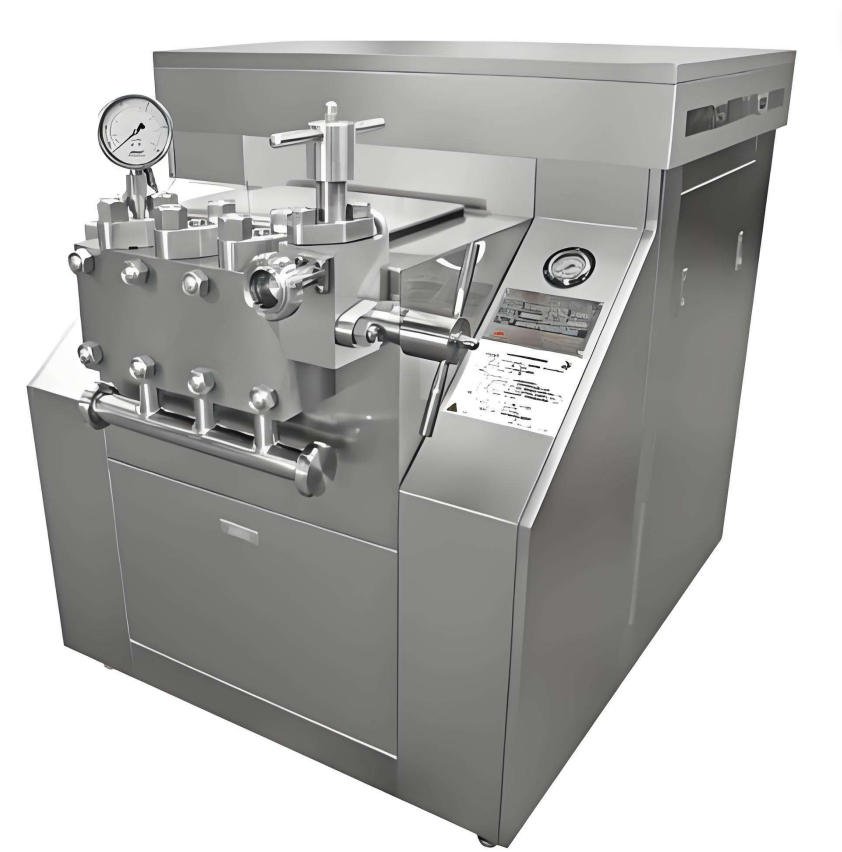
High pressure homogenizer
Product Details:
- Product Type: High pressure Homogenizer
- General Use: Food industry
- Material: Stainless Steel
- Type: Fluids Grinding Machine
- Computerized: No
- Automatic : No
- Power: Up to 200kw
Product Description
A high pressure homogenizer is a device that uses high pressure to emulsify, disperse, and pulverize fluids. It is suitable for fluids but not for solids or gases. It works by forcing fluid through a homogenizing valve under high pressure, generating high-energy impacts that can disperse or pulverize particles or droplets in the fluid. It is a versatile and efficient laboratory device used to improve the quality and stability of various products across different industries, with wide applications in biopharmaceuticals, nanomaterials, food, and cosmetics.

High pressure homogenizer Structure Principle and Features
The high pressure homogenizer mainly consists of a high-pressure homogenizing chamber and a pressurizing mechanism. The diamond inside the high-pressure homogenizing chamber has specially designed geometrically shaped micropores. Under the action of the pressurizing mechanism, the high-pressure solution passes through the homogenizing chamber at supersonic speed. The material is simultaneously subjected to mechanical forces such as high-speed shearing, high-frequency oscillation, cavitation, and convective impact, as well as corresponding thermal effects. The resulting mechanical and chemical effects induce changes in the physical, chemical, and particle structure properties of the material macromolecules, forming a more uniform particle size and evenly distributed in the solution, ultimately achieving homogenization.
Pressure boosting types of high pressure homogenizer
Mechanical Type
The motor drives the crankshaft to reciprocate the plunger, directly pressurizing the material. Multiple sets of plungers provide continuous pressure, resulting in high homogenization pressure and large output. However, the minimum material quantity is relatively large, leading to a larger residue. Furthermore, the motor-driven crankshaft requires a multi-stage reduction mechanism, resulting in lower equipment efficiency and a larger size. Suitable for food, chemical, and low-pressure applications.
Hydraulic Type
The hydraulic type is a recent development in ultra-high pressure technology. The motor drives an oil pump, pressurizing the material through a hydraulic system. The hydraulic system can provide higher pressure, resulting in higher equipment efficiency, a relatively smaller size, and a smaller minimum material quantity. Suitable for both experimental and production applications. Hydraulic homogenizers are expensive, but hydraulic boosting allows for low-speed, high-thrust piston movement, increasing machine lifespan and reducing maintenance costs. Parallel four-cylinder technology, used in high-pressure homogenizers, provides stable pressure without the need for an accumulator. Hydraulic operation can achieve ultra-high pressures of 45,000 psi.

Key factors when choosing a high pressure homogenizer
Maximum Homogenization Pressure
The operating pressure of high pressure homogenizers is generally between 20-80 MPa (megapascals), with some equipment even reaching over 100 MPa. Higher pressure results in stronger shear forces, impact forces, and cavitation effects on the fluid as it passes through the homogenization valve, making droplets or particles easier to break and disperse, achieving better homogenization. However, excessively high pressure can also lead to increased equipment wear, increased energy consumption, and may even damage some materials, producing excessively fine particles, which may affect product stability. For example, in food processing, if milk is homogenized to too low a viscosity, it may cause coagulation or stratification during storage. Conversely, if the pressure is set too low, the homogenization effect may be unsatisfactory, resulting in uneven particle size distribution and affecting the final quality and stability of the product. For example, in cosmetic manufacturing, if the mixture of oils and water is not sufficiently homogenized, separation may occur during product use. Therefore, in practice, the pressure needs to be adjusted according to the characteristics of the material and the homogenization requirements.
Homogenization Times
The number of homogenization times refers to the number of times the material passes through the homogenization valve in a high pressure homogenizer. Generally, the more homogenization times, the better the homogenization effect, but this also increases production costs and energy consumption.
– Excessive Homogenization Times: Too many homogenization times may lead to excessive material breakage, producing overly fine particles, thus affecting the stability and functionality of the product. For example, in biopharmaceuticals, if cells are excessively broken down, their activity may be affected.
– Insufficient Homogenization Times: Insufficient homogenization times may result in uneven particle size distribution, affecting the final quality and stability of the product. For example, in food processing, if milk does not reach a sufficient number of homogenization times, its taste and nutritional value may be affected.
Homogenizing Valve Structure
The homogenizing valve is a core component of a high pressure homogenizer, and its structure directly affects the homogenization effect. Common homogenizing valve structures include orifice plate, slit, and combined types. Different structures are suitable for different materials and homogenization requirements. When selecting a homogenizing valve, factors such as the material’s viscosity, particle size, and temperature need to be considered to determine the appropriate valve.
If the selected homogenizing valve structure is unsuitable for the material’s characteristics, it may lead to poor homogenization results. For example, in cosmetic manufacturing, if the homogenizing valve used is unsuitable for a mixture of oils and water, it may cause product separation during use. In biopharmaceuticals, selecting a suitable homogenizing valve structure based on cell characteristics and homogenization requirements can effectively break down cells and release intracellular products.
Temperature
Temperature also has a certain impact on the homogenizer’s performance. Generally, the higher the temperature, the lower the material viscosity, the better the flowability, and the better the homogenization effect. However, excessively high temperatures may reduce the material’s stability or even cause chemical reactions. For example, in food processing, if the temperature is too high during homogenization of milk, it may affect its nutritional value and taste. However, if the temperature is too low, it may cause the viscosity of the material to increase, its flowability to decrease, and the homogenization effect to be poor. For example, in cosmetic manufacturing, if the temperature is too low during the homogenization of a mixture of oils and water, it may cause the product to separate during use.
Applications Across Industries
High pressure homogenizers are one of the most effective production equipment for preparing nanomaterials using top-down nanotechnology processes. Their applications are very wide-ranging, with a global market demand of nearly 10 billion RMB.
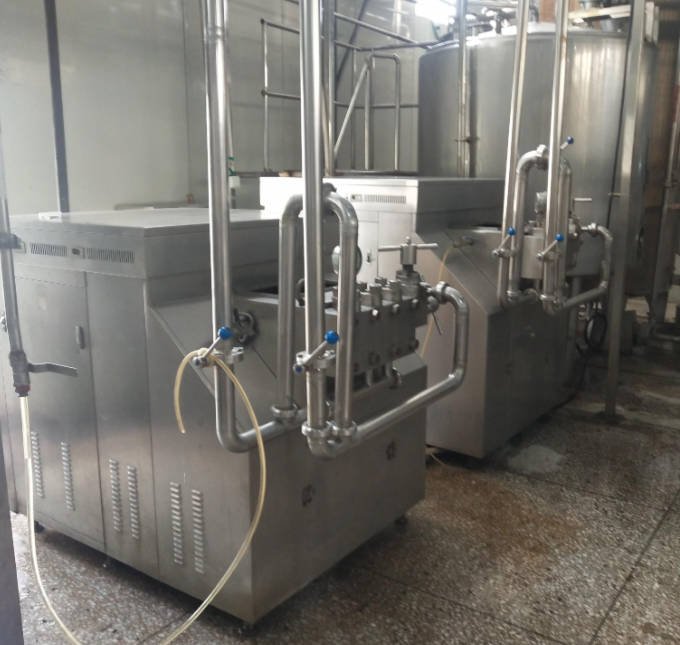

● In the pharmaceutical industry, it is used to prepare fat particles, microemulsions, liposomes, nanosuspensions, nanoparticles, and microcapsules;
● In bioengineering products, it is used for cell disruption, microemulsions, and liposome-type adjuvants;
● In the food and beverage industry, it is used for homogenization and emulsification to improve product stability, taste, appearance, and effective nutrient encapsulation;
● In the cosmetics and fine chemical industries, it is used for homogenization and dispersion to enhance functionality, differentiate products, increase added value, and ensure process stability;
● It is used for the dispersion and exfoliation of conductive pastes, resistive pastes, graphene, carbon nanotubes, and nano-oxides.
| Model | Capacity(L/H) | Power (KW) | Maximum Pressure (Mpa) | Outline Dimension (mm) |
|---|---|---|---|---|
| NLH1000-45 | 1000 | 15 | 45 | 1400-900-950 |
| NLH2000-45 | 2000 | 30 | 45 | 1450-1000-1100 |
| NLH3000-40 | 3000 | 37 | 40 | 1650-1150-1200 |
| NLH5000-50 | 5000 | 75 | 50 | 1950-1250-1450 |
| NLH6000-50 | 6000 | 90 | 50 | 2150-1550-1550 |
| NLH8000-30 | 8000 | 75 | 30 | 1950-1250-1450 |
| NLH10000-30 | 10000 | 90 | 30 | 2150-1550-1550 |
| NLH15000-40 | 15000 | 200 | 40 | 2250-2000-1500 |
Would you like to start a project with us?
To request more information about a particular homogenizer and application, or to request a quote, fill out our request form by Click”GET A QUOTE”. If you have any questions, don’t hestitate to email us at sales@newafluids.com.