
Rotary Lobe Pump
We provide a wide range of homogenizers
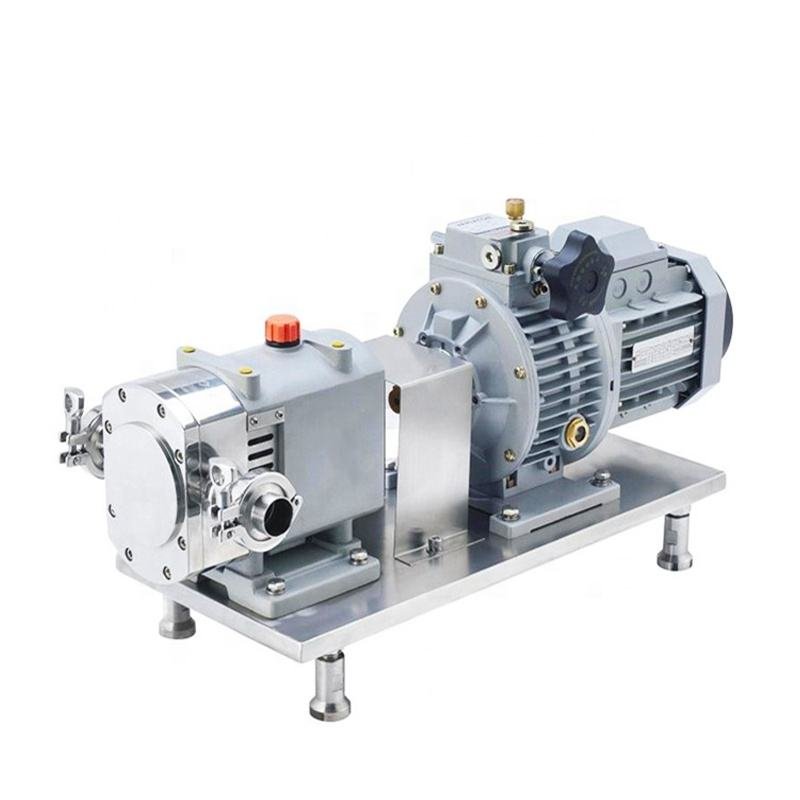
Rotary Lobe Pump
Product Details:
- Product Type: Rotary Lobe Pump
- General Use: Industrial application
- Material: Stainless Steel
- Type: NW65
- Computerized: No
- Automatic : No
- Flow: Up to 250m3/h
Product Description
NEWAFLUIDS rotary lobe pumps are to be found in numerous processes, where their reliable low shear flow characteristics are ideally suited to the transfer
of media with high density, high soild or high viscosity. We select the pump according to your characteristics of medium and condition of the technological
requirements, bring you the best pump for your critical process, satisfied by you and your customers. Over the years, NEWAFLUIDS has been focused on
communication with customers and constantly optimize our pumps to be low maintenance, long-life cycle and environmental friendly.
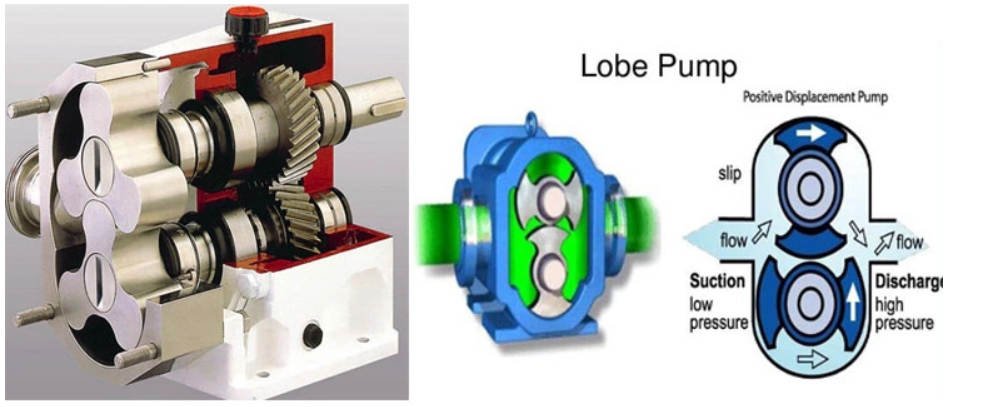
Rotary Lobe Pump Working Principle and Operation
The working principle of a lobe pump is based on positive displacement. The pump moves fluid by trapping a fixed volume and transporting it from the inlet to the outlet.
Step-by-step process:
Suction Phase
When the lobes rotate, the space between the lobes and the pump casing increases on the inlet side, creating a partial vacuum.
This vacuum draws the liquid into the pump chamber.Trapping the Fluid
The liquid becomes trapped in cavities formed between the lobes and the casing.Transport Phase
As the lobes continue to rotate, the trapped liquid is carried around the inside of the casing from the inlet side to the outlet side.Discharge Phase
When the lobes mesh again at the outlet side, the volume decreases and the liquid is forced out of the pump under pressure.
Rotary Lobe Pump Specification and Features
Displacement: positive displacement, Displacement is proportional to the speed. Max. Capacity is upto 300m3/h.
Discharge pressure: upto 1.2Mpa.
Suction capacity: Movable pumps can be used to pump canned medium, with intake vacuum of 0.08 Mpa.
Work efficiency: up to 90%
Special mediums to handle: high viscosity up to 1.5 million cps, high solid mediums up to 60%, sensitive mediums.
Reversible running allowed: Forward suction, reversal flushing can be realized with pump’s symmetric structure, reversible transportation direction.
Dry running: with Smart power’s special design on mechanical seal, dry running can be realized.
Maintenance: Compact structure, little space occupation, no need to move pipe systems when maintain.
Wear-resisting: all the contact parts are made of stainless steel. Nearly no wearing parts.
Low shearing: Low working speed, gap is kept between the rotors and between the rotor and the pump body, no friction,long life.
Replacement: take replace of screw pumps, gear pumps, centrifugal pump, diaphragm pump etc.
Low cost: high working efficiency, low consumption, environmental friendly, low maintenance, long life.
How to select the right Rotary Lobe Pump for your application
Selecting the right rotary lobe pump is critical for ensuring efficiency, reliability, and long service life. The selection process mainly depends on process requirements, fluid properties, and pump configuration. Below is a practical guide widely used in engineering and industrial pump selection.
1. Determine the Required Flow Rate
The flow rate is the first parameter when selecting a rotary lobe pump. It represents the volume of fluid that must be transferred per unit of time (such as L/min or m³/h).
If the pump is too small, it may run at excessive speed and overheat; if it is too large, energy consumption and costs increase. Pumps typically perform best when operating at 30–60% of their maximum capacity.
Example formula used in pump sizing:
Flow rate = volume per revolution × pump speed × time
This relationship helps determine the required pump size and motor speed for a given application.
2. Analyze the Fluid Characteristics
The properties of the fluid strongly influence pump selection.
Viscosity
Viscosity determines how easily a liquid flows. Higher viscosity fluids require lower pump speed and higher torque. Extremely thick fluids may reduce the pump’s maximum output.
Typical rotary lobe pumps can handle fluids from 1 cP up to about 1,000,000 cP, making them suitable for both thin liquids and heavy pastes.
Solids Content
Rotary lobe pumps can pass soft solids without damaging them. Some models can handle particles up to 38 mm (1.5 inches) depending on design.
Temperature and Chemical Properties
The pump material must be compatible with the fluid. For example:
Stainless steel for food or pharmaceutical products
Hastelloy or special alloys for corrosive chemicals
Material selection depends on temperature, corrosion resistance, and sanitary requirements.
3. Calculate Required Pressure
The pump must overcome the total differential pressure in the system. This includes:
Static head (height difference)
Pipe friction losses
Valve and filter resistance
Safety margin
Typical rotary lobe pumps can operate up to about 20 bar (300 psi) depending on the model.
4. Consider Operating Conditions
The working environment also affects pump selection.
Important factors include:
Suction lift or self-priming capability
Pump speed and motor power
Continuous or intermittent operation
Variable flow requirements
For applications with varying demand, a variable frequency drive (VFD) can adjust pump speed to maintain efficient operation.
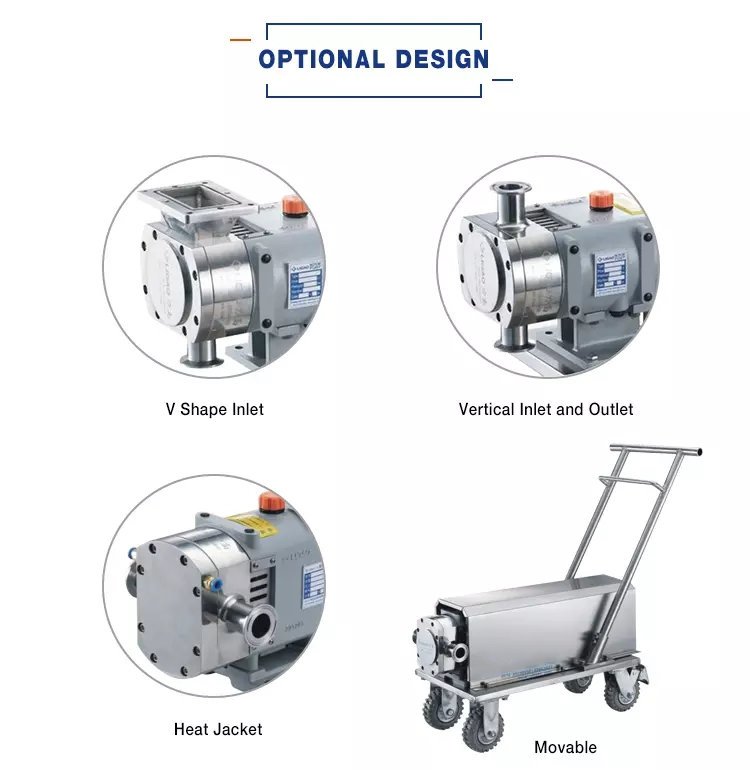
5. Select Proper Pump Configuration
Finally, choose the correct pump design and accessories.
Common options include:
Seal type: single mechanical seal, double seal, or cartridge seal
Connection type: flange, threaded, or sanitary tri-clamp
Drive type: electric motor, hydraulic motor, or pneumatic drive
Sanitary standards: FDA, 3-A, or EHEDG certification for food and pharma industries
| Model | Displacement (L/r) | Rotation Speed (r/min) | Flow Rate (M³/h) | Dischage Pressure (Mpa) | Electrical Power (Kw) | Suc. Pressure (Mpa) | Inlet & Outlet (mm) |
|---|---|---|---|---|---|---|---|
| NW25 | 0.15 | 0-600 | 2 | 0.1-1.2 | 0.55-2.2 | -0.095 | 25 |
| NW40 | 0.32 | 0-550 | 5 | 0.1-1.2 | 1.5-4 | -0.095 | 40 |
| NW50 | 0.65 | 0-550 | 10 | 0.1-1.2 | 2.2-7.5 | -0.095 | 50 |
| NW65 | 1.74 | 0-550 | 20 | 0.1-1.2 | 4-15 | -0.095 | 65 |
| NW80 | 2.48 | 0-550 | 30 | 0.1-1.2 | 5.5-22 | -0.095 | 80 |
| NW100 | 3.65 | 0-550 | 40 | 0.1-1.2 | 7.5-30 | -0.095 | 100 |
| NW125 | 4.60 | 0-550 | 50-80 | 0.1-1.2 | 11-45 | -0.095 | 125 |
| NW150 | 11.56 | 0-420 | 120 | 0.1-1.2 | 22-90 | -0.095 | 150 |
Would you like to start a project with us?
To request more information about a particular homogenizer and application, or to request a quote, fill out our request form by Click”GET A QUOTE”. If you have any questions, don’t hestitate to email us at sales@newafluids.com.