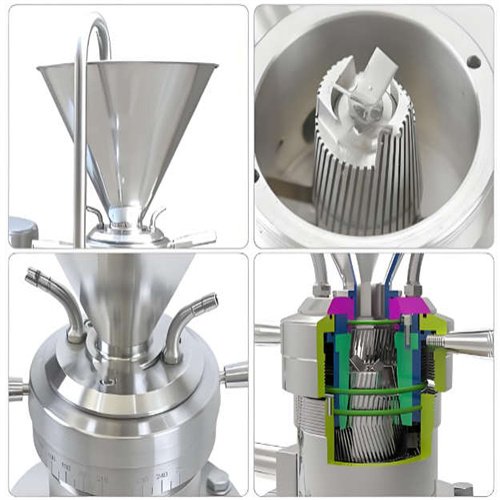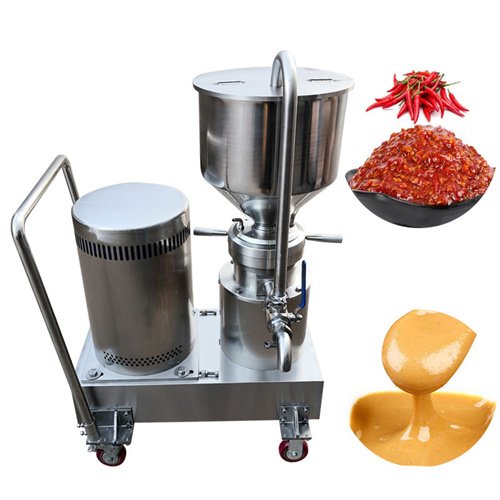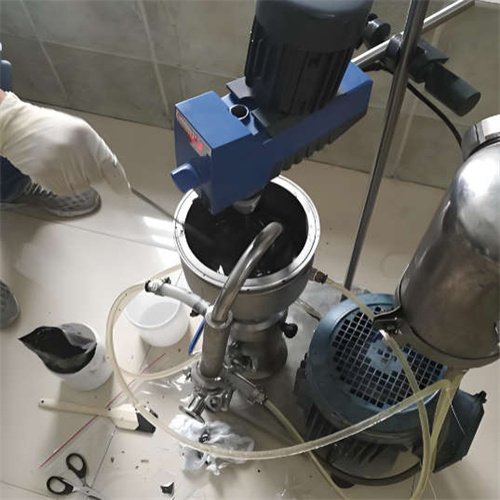
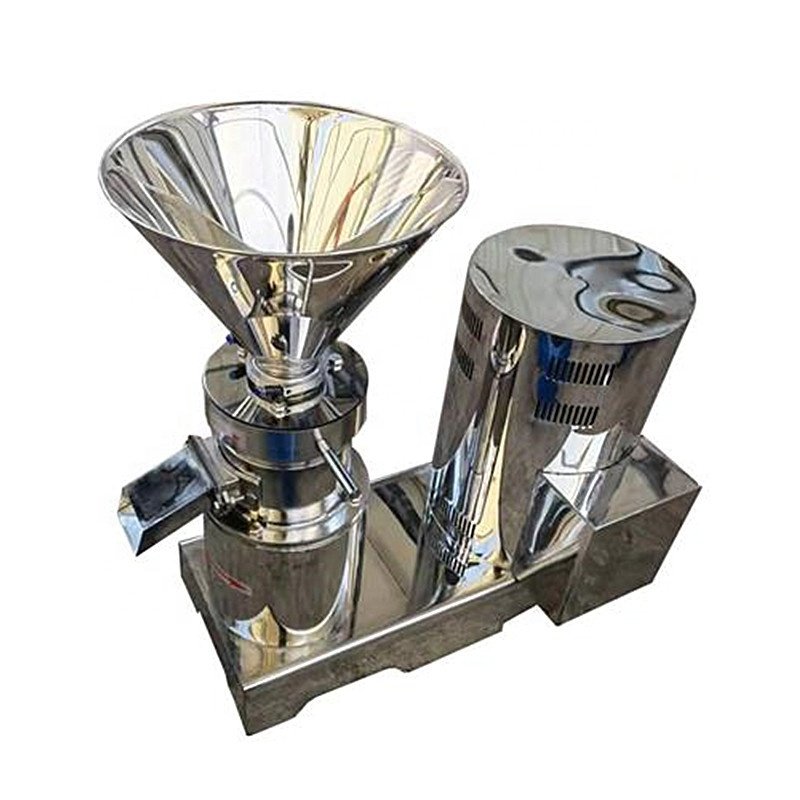
What is a Split Type Colloid Mill?
The “Split Type Colloid Mill” design refers to the construction where the grinding chamber (containing the rotor and stator) can be easily separated or “split” from the main motor and drive assembly. This is typically achieved via a robust flange connection.
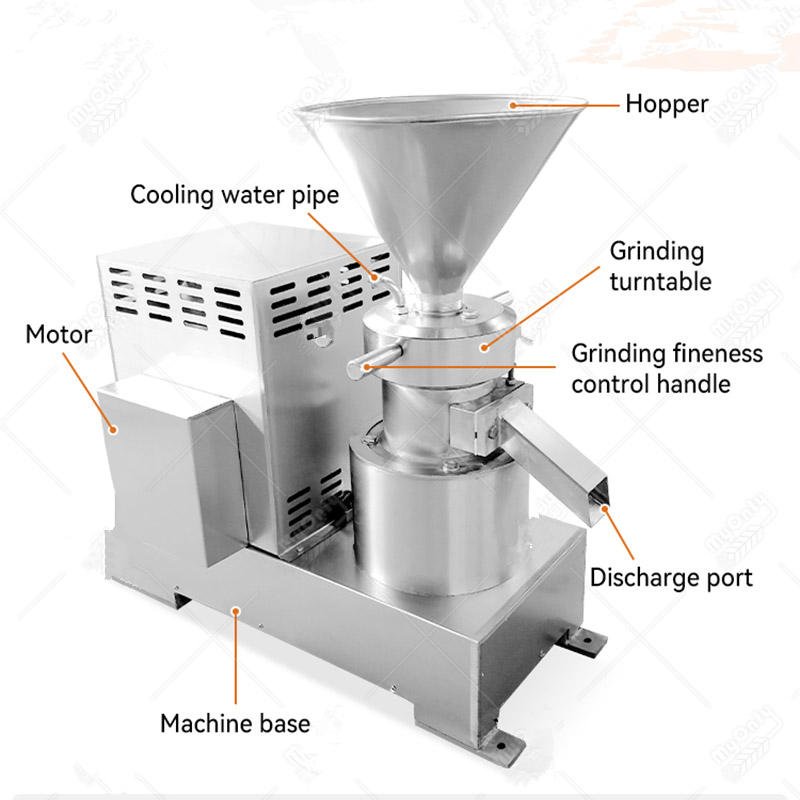
304 Stainless Steel Split Type Colloid Mill
Composition: 18% Chromium, 8% Nickel.
Price Implication: Lower material cost makes 304 SS split type colloid mills more budget-friendly.
Properties: Excellent corrosion resistance to most oxidizing acids and general food substances. It offers great form ability and weld ability.
Best For: General food products (sauces, pastes, dairy),cosmetics, chemical emulsions where chlorides are not highly concentrated. It is the more economical option .
316 Stainless Steel Split Type Colloid Mill
Composition: 16% Chromium, 10% Nickel, and the key addition: 2% Molybdenum.
Properties: The molybdenum significantly enhances resistance to chlorides and corrosive industrial solvents. Superior for saline environments and acidic/alkaline processes.
Best For: Pharmaceutical formulations, marine products, chemical processes involving salts (chlorides), highly acidic sauces, and applications requiring the highest sanitary standards.
Price Implication: Higher alloy content makes 316 SS approximately 20-35% more expensive than 304 for the same mill model.
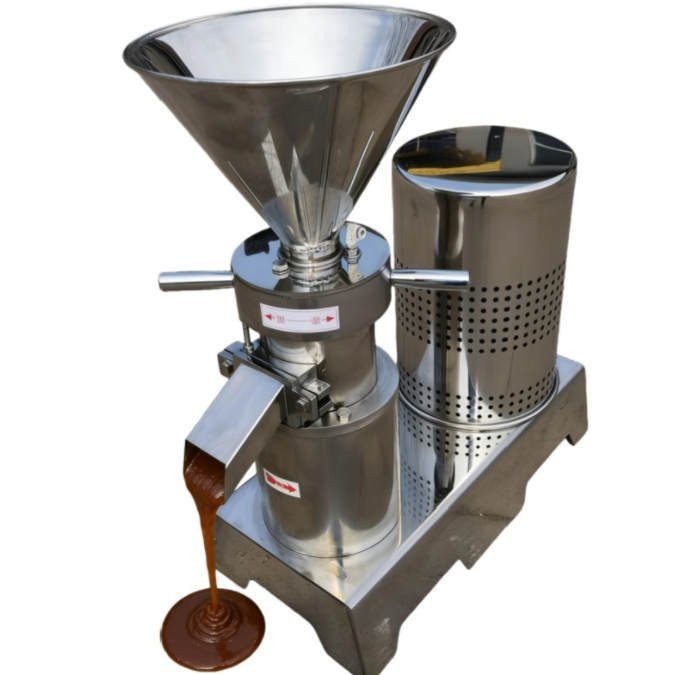
2026 Split Type Colloid Mill Price List (304/316 Stainless Steel)
Prices below are FOB China (2026 updated), based on common models, power, and capacity. Note that prices may vary by models, customization, and order quantity. We’ve categorized them by size to help you match your production needs:
Small Split Type Colloid Mill (1.5–4kW, 50–200L/h Capacity)
Ideal for small businesses, labs, or pilot production lines. These models are compact, easy to operate, and suitable for small-batch processing of sauces, creams, or lab samples.
- 304 Stainless Steel: $650 – $900
- 316 Stainless Steel: $800 – $1,100
- Common Models: NMF-65, NMF-80 (capacity 0.2–1t/h, fineness 2–40μm)
Medium Split Type Colloid Mill (5.5–7.5kW, 200–500L/h Capacity)
Suitable for medium-scale production in food, cosmetic, or pharmaceutical industries. These models support continuous operation and handle higher viscosity materials with ease.
- 304 Stainless Steel: $900 – $1,500
- 316 Stainless Steel: $1,100 – $1,800
- Common Models: NMF-100, NMF-120 (capacity 0.5–3t/h, power 5.5–7.5kW)
Large Split Type Colloid Mill (15–22kW, 500–3000L/h Capacity)
Designed for industrial-scale production lines (e.g., large food factories, chemical plants, pharmaceutical facilities). These models feature heavy-duty construction, high efficiency, and advanced sealing technology to prevent leaks.
- 304 Stainless Steel: $1,500 – $2,500
- 316 Stainless Steel: $1,800 – $3,000
- Common Models: JMF-200, JMF-250 (capacity 1–20t/h, power 15–22kW)
Customized Split Type Colloid Mill (304/316 Stainless Steel)
If you need special features—such as explosion-proof motors, jacketed cooling systems, or custom grinding heads—prices will increase by 15–30%. For example:
- Explosion-proof 304 Model: $1,200 – $1,800 (medium size)
- Jacketed Cooling 316 Model: $1,500 – $2,200 (medium size)
Key Factors That Affect Split Type Colloid Mill Prices
Why do prices vary so much? Understanding these factors will help you avoid overpaying and ensure you get the best value for your money:
Stainless Steel Grade (304 vs. 316)
As mentioned earlier, 316 stainless steel is 20–35% more expensive than 304 because of its superior corrosion resistance and compliance with stricter industry standards. Choose 316 if you process acidic/alkaline materials or need pharmaceutical-grade equipment; 304 is sufficient for most food and cosmetic applications.
Motor Quality & Power
A high-efficiency, variable frequency drive (VFD) motor adds cost but provides precise speed control and energy savings.
Rotor-Stator Design & Tolerance
Finer tolerances and specialized tooth geometries (e.g., corrugated, diamond, multi-stage) for specific results increase machining costs.
Sealing System
Standard mechanical seals are common. For aseptic or ultra-hygienic applications, double mechanical seals or advanced sanitary seals add expense.
Surface Finish
A standard 2B finish is typical. A mirror polish (Ra < 0.8 µm) for sanitary applications involves additional labor and cost.
Tips to Get the Best Price for Your Split Type Colloid Mill
Now that you know the price range and factors, here are actionable tips to save money without compromising quality:
- Choose the Right Stainless Steel Grade: Don’t overspend on 316 if 304 meets your needs. For example, if you process peanut butter or jam, 304 is sufficient; reserve 316 for acidic sauces or pharmaceutical creams.
- Buy Direct from Manufacturers: Skip middlemen (distributors) to save 10–15%. Many Chinese manufacturers offer factory-direct pricing and customization options (NEWAFLUIDS is the leading manufacturer for colloid mill in China)
- Order in Bulk: If you need multiple mills, bulk orders (3+) can get you 5–10% discounts.
- Compare Quotes: Request quotes from 3–5 manufacturers to compare prices and features. Look for hidden costs (e.g., shipping, installation, spare parts) that may not be included in the initial quote.
- Prioritize Long-Term Value: A slightly more expensive, high-quality model (with a warranty) will save you money on maintenance and replacements compared to a cheap, low-quality mill.
Conclusion
Split type colloid mills made of 304/316 stainless steel are a long-term investment for your business. The 2026 price range—from $650 to $3,000—caters to every scale of operation, from small labs to large industrial facilities. By understanding the factors that affect prices and following our tips, you can find a model that fits your budget and meets your production needs.
Remember: The cheapest option isn’t always the best. Prioritize quality, stainless steel grade, and manufacturer reliability to ensure your split type colloid mill delivers consistent performance for years to come. Whether you’re processing food, cosmetics, or pharmaceuticals, a 304/316 stainless steel split type colloid mill is a versatile, durable choice that justifies its cost.