Why rotary lobe pump matters?
When transferring shear-sensitive fluids, high-viscosity pastes, or liquids containing delicate solids, conventional centrifugal pumps often struggle. High internal velocities can damage fragile products, cause shear degradation, or lead to clogging.
This is where the rotary lobe pump excels. As a non-contacting, positive displacement pump, the rotary lobe pump provides gentle, low-shear fluid handling while maintaining precise flow rates across a wide range of viscosities.
From dairy processing and chocolate transfer to pharmaceutical syrups and sludge handling, rotary lobe pumps are essential across modern industrial manufacturing. This comprehensive guide covers their working principles, key components, industrial applications, and how to select the right pump for your facility.
What Is a Rotary Lobe Pump?
A rotary lobe pump is a positive displacement pump that uses two or more rotating lobes inside a pump chamber to move fluid.
As the lobes rotate, they create expanding cavities on the suction side of the pump. These cavities draw fluid into the pump. The rotating lobes then carry the fluid around the outer wall of the pump chamber toward the discharge side.
The lobes rotate without directly contacting each other. Timing gears keep the rotors synchronized and maintain the required clearance between them.
Because each rotation moves a relatively fixed volume of fluid, rotary lobe pumps can provide accurate and consistent flow across a wide range of operating conditions.
Working Principle of a Rotary Lobe Pump
The operation of a rotary lobe pump relies on creating expanding and contracting fluid chambers as the lobes rotate.
[ Fluid Inlet ] ──► [ Expanding Pocket ] ──► [ Perimeter Displacement ] ──► [ Contracting Chamber ] ──► [ Fluid Outlet ]
The pumping cycle follows four primary steps:
1. Suction Phase (Expanding Cavity)
As the synchronized lobes rotate out of mesh near the inlet port, the volume between them expands. This creates a low-pressure area (partial vacuum) that draws fluid into the pump casing.
2. Fluid Transportation
As the lobes continue to turn, fluid becomes trapped in the pockets between the lobe wings and the internal pump casing wall. The fluid is carried around the outer perimeter of the pump chamber toward the discharge port. It does not pass between the lobes.
3. Discharge Phase (Contracting Cavity)
Near the outlet port, the rotating lobes mesh back together. This meshing action contracts the available cavity volume, forcefully displacing the trapped fluid out through the discharge port.
4. Continuous Pulse-Free Flow
Because the pump features multiple lobes (typically two, three, or four), this suction-and-displacement cycle repeats continuously, generating a smooth, proportional flow rate regardless of pressure changes.

Main Components of a Rotary Lobe Pump
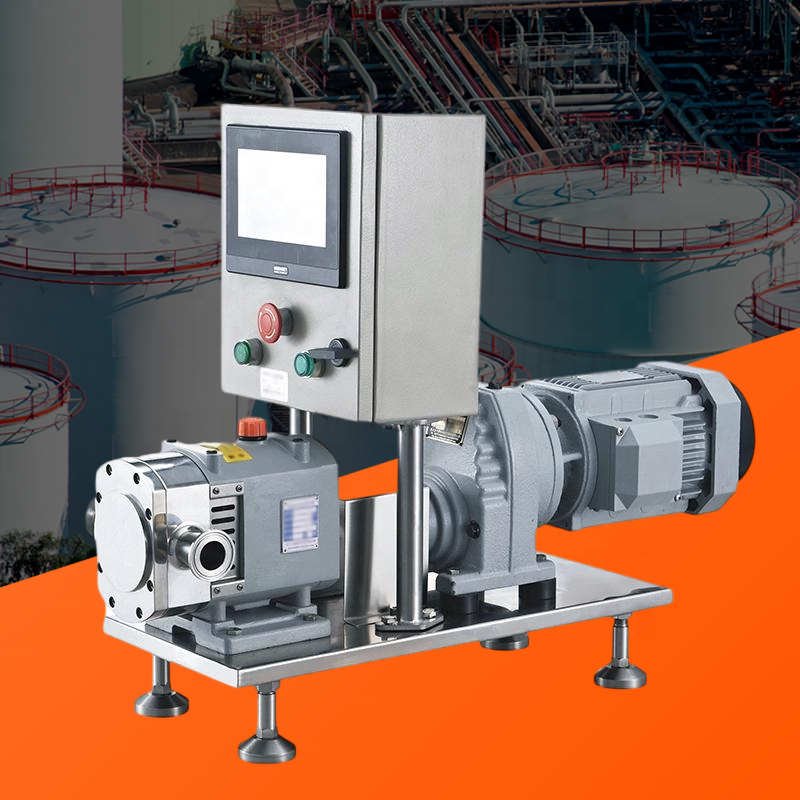
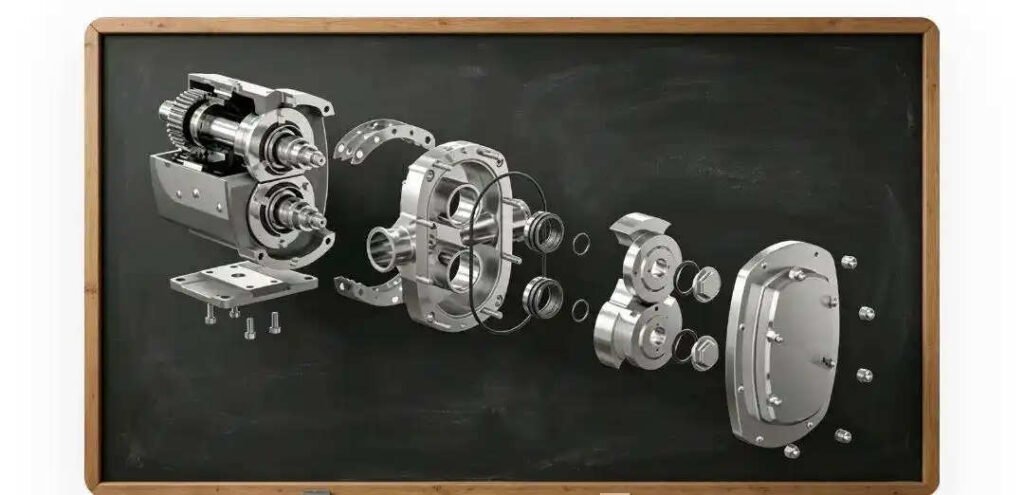
A typical rotary lobe pump consists of several important components.

1. Pump Casing
The pump casing forms the chamber where the fluid is transported. It is commonly manufactured from stainless steel, cast iron, or other materials selected according to the application.
Sanitary pumps often use stainless steel with polished internal surfaces.
2. Rotors or Lobes
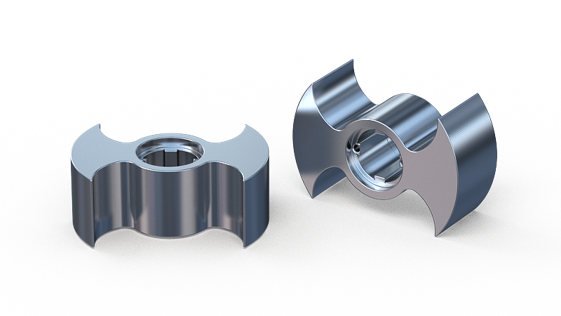
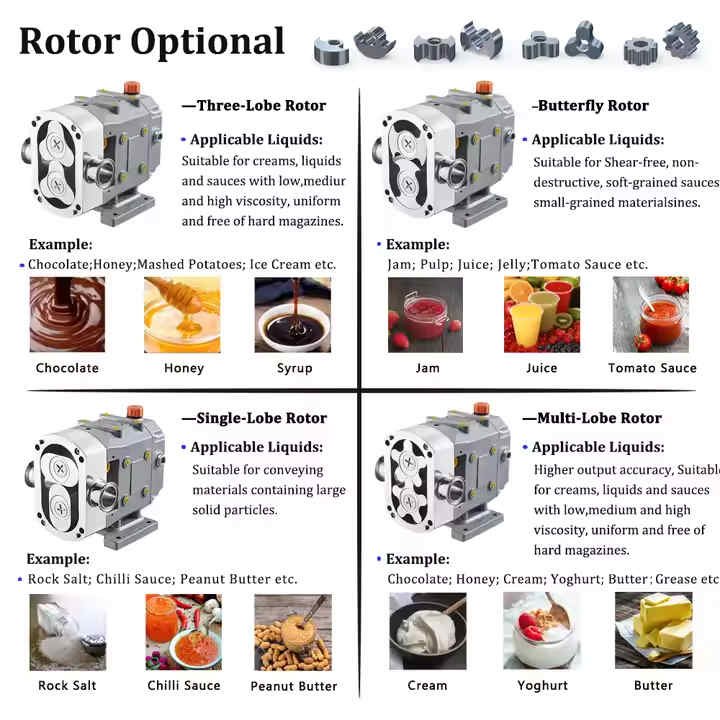
The lobes are the primary pumping elements. Common designs include two-lobe, three-lobe, and multi-lobe rotors.
Different rotor profiles influence pumping efficiency, flow pulsation, clearance requirements, and the ability to handle solids.
3. Timing Gears
Timing gears synchronize the rotation of the lobes. They are generally located in the gearbox or drive section and are isolated from the pumped product.
4. Mechanical Seals
Mechanical seals prevent fluid from leaking along the rotating shafts. Seal materials must be selected according to the fluid’s chemical compatibility, temperature, pressure, and cleaning requirements.
5. Bearings and Shafts
The shafts transmit torque from the drive system to the rotors, while bearings support the rotating components and maintain alignment.
6. Motor and Gearbox
The motor supplies the power required to rotate the pump. A gearbox or speed reducer may be used to achieve the required operating speed and torque.
Variable frequency drives (VFDs) can provide adjustable speed control when compatible with the motor and pump design.
Types of Lobe Configurations
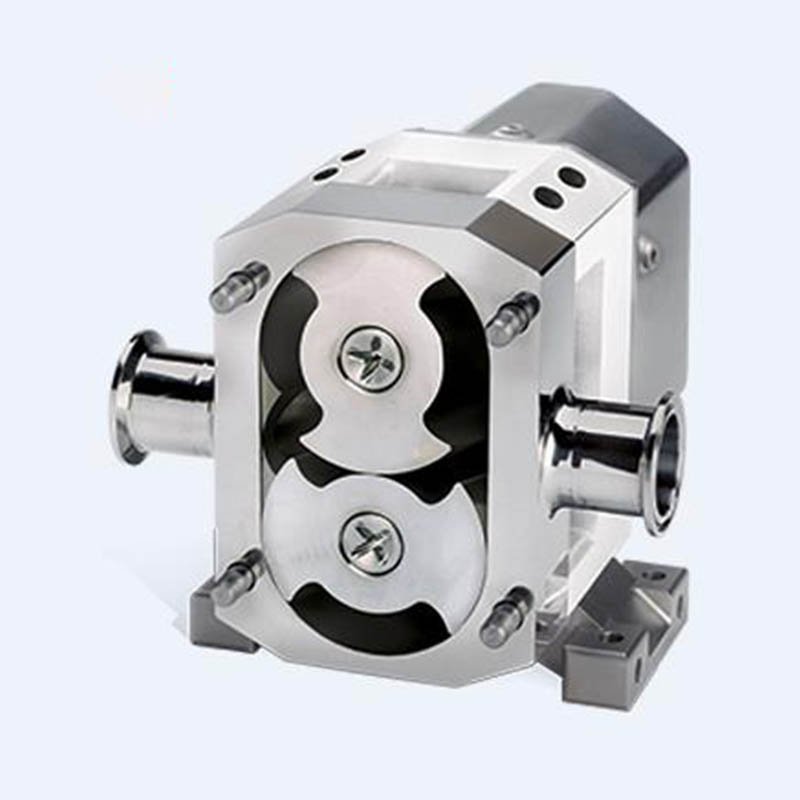
1. Two-Lobe Rotary Lobe Pumps
Two-lobe pumps are relatively simple and can provide reliable fluid transfer for many general industrial applications.
They can be suitable for liquids containing suspended solids and for applications where gentle pumping is important.
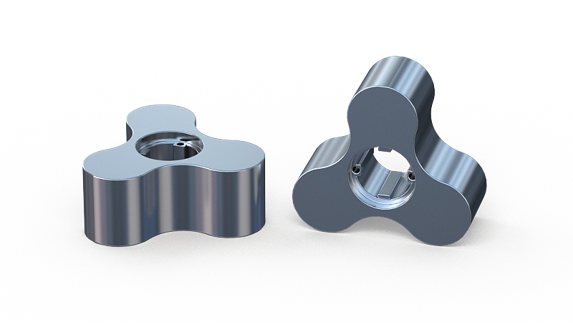
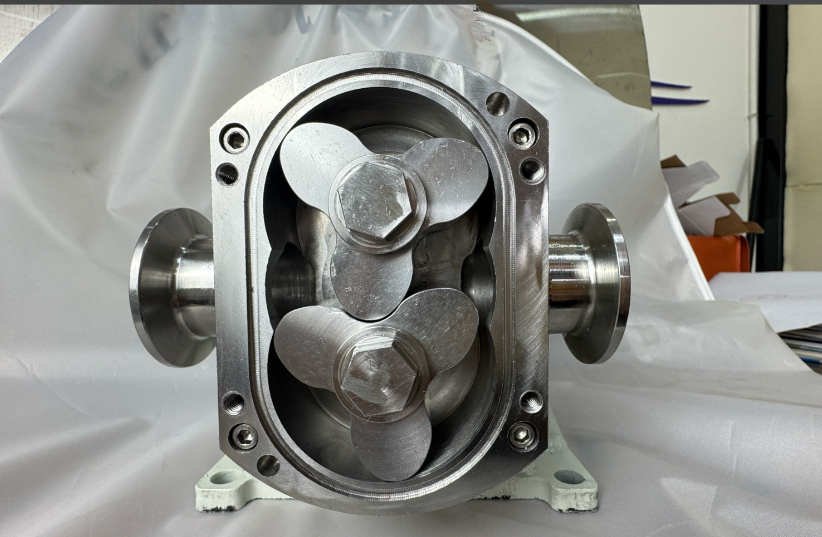
2. Three-Lobe Rotary Lobe Pumps
Three-lobe rotors can provide smoother flow characteristics than some two-lobe designs.
They are commonly found in applications requiring hygienic fluid handling, including food, beverage, and pharmaceutical processing.
3.Multi-Lobe (4+ Lobes or Rubber-Coated Lobes)
- Best For: High-pressure metering, low-pulsation tasks, or abrasive municipal sludge.
- Characteristics: Delivers low vibration and consistent dosing accuracy.
Common Applications of Rotary Lobe Pumps
Rotary lobe pumps are used across a wide range of industries.
Food and Beverage Industry
Common applications include:
- Yogurt and dairy products
- Fruit pulp and fruit concentrates
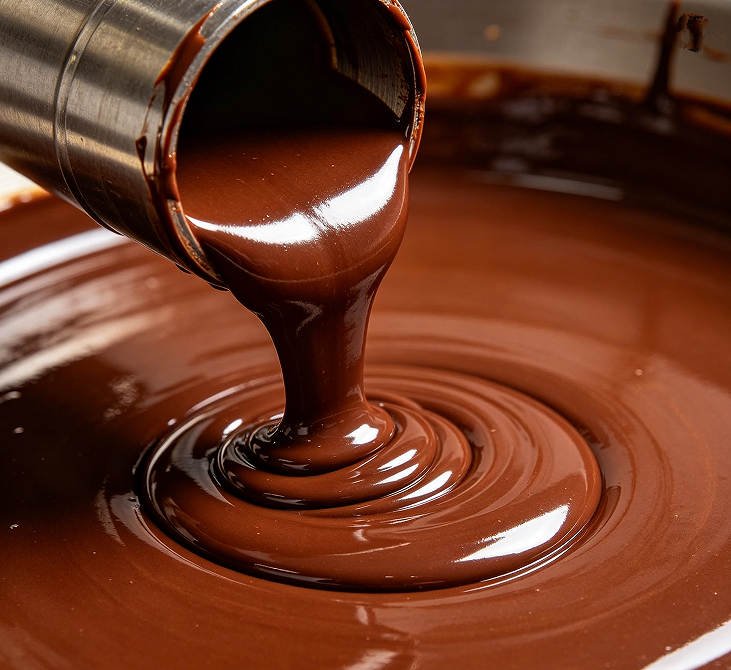
- Chocolate and syrup
- Sauces, ketchup, and mayonnaise
- Creams and food emulsions
- Beverage concentrates
Sanitary construction and suitable rotor designs are important when handling food products.
Pharmaceutical and Cosmetic Industry
Rotary lobe pumps can transfer products such as:
- Pharmaceutical syrups
- Cosmetic creams and lotions
- Gels and pastes
- Personal care products
- Hygienic liquid formulations
The selected pump must meet the process’s cleanliness, material compatibility, and validation requirements.
Chemical Industry
Rotary lobe pumps can be used for selected chemical products, including resins, polymers, viscous additives, and certain chemical solutions.
Chemical compatibility must be checked for all wetted components, including the casing, rotors, elastomers, and mechanical seals.
Wastewater Treatment
Industrial and municipal wastewater facilities may use rotary lobe pumps to transfer sludge, thickened solids, and other challenging fluids.
The suitability of a particular model depends on solids size, abrasiveness, viscosity, and the required pressure.
Biotechnology and Industrial Processing
In biotechnology and other process industries, rotary lobe pumps can transfer suitable process liquids and viscous materials where controlled flow and hygienic construction are required.


Rotary Lobe Pump vs. Centrifugal Pump vs. Gear Pump
Selecting the correct pump type depends on your fluid’s viscosity, shear sensitivity, and system pressure requirements:
| Feature | Rotary Lobe Pump | Centrifugal Pump | External Gear Pump |
| Operating Principle | Positive Displacement | Dynamic Kinetic Energy | Positive Displacement |
| Viscosity Capability | Low to Very High ($1 – 1,000,000 cPs) | Best for Low Viscosity (< 500 cPs) | Medium to High Viscosity |
| Shear Sensitivity | Very Low (Gentle) | High Shear | Moderate to High Shear |
| Solid Handling | Excellent (Delicate & large solids) | Poor (Risk of clogging) | Very Poor (Solids cause jam) |
| Metal Contact | No (External timing gears) | No | Yes (Meshing gears touch) |
| Hygiene / CIP | Exceptional (3-A, EHEDG) | Moderate to High | Low to Moderate |
How to Select a Rotary Lobe Pump
When sizing a rotary lobe pump for your process line, evaluate the following parameters:
- Fluid Viscosity and Flow Behavior: Higher viscosities require lower pump RPMs to allow fluid to fully fill the expanding rotor cavity.
- System Differential Pressure: Ensure the pump casing, shafts, and drive motor can handle the total dynamic head (TDH) and discharge pressure.
- Solid Particle Size: Select bi-wing or tri-lobe designs based on the maximum diameter of soft or hard solids in the media.
- Sanitary Certifications: Verify that contact materials meet 3-A, EHEDG, or FDA standards if processing food, beverages, or pharmaceuticals.
- Port Orientation: Choose horizontal or vertical porting to fit your piping layout and self-draining requirements.
Specifications of NEWAFLUIDS rotary lobe pump
| Model | Displacement (L/r) | Rotation Speed (r/min) | Flow Rate (M³/h) | Dischage Pressure (Mpa) | Electrical Power (Kw) | Suc. Pressure (Mpa) | Inlet & Outlet (mm) |
|---|---|---|---|---|---|---|---|
| NW25 | 0.15 | 0-600 | 2 | 0.1-1.2 | 0.55-2.2 | -0.095 | 25 |
| NW40 | 0.32 | 0-550 | 5 | 0.1-1.2 | 1.5-4 | -0.095 | 40 |
| NW50 | 0.65 | 0-550 | 10 | 0.1-1.2 | 2.2-7.5 | -0.095 | 50 |
| NW65 | 1.74 | 0-550 | 20 | 0.1-1.2 | 4-15 | -0.095 | 65 |
| NW80 | 2.48 | 0-550 | 30 | 0.1-1.2 | 5.5-22 | -0.095 | 80 |
| NW100 | 3.65 | 0-550 | 40 | 0.1-1.2 | 7.5-30 | -0.095 | 100 |
| NW125 | 4.60 | 0-550 | 50-80 | 0.1-1.2 | 11-45 | -0.095 | 125 |
| NW150 | 11.56 | 0-420 | 120 | 0.1-1.2 | 22-90 | -0.095 | 150 |
FAQ
Q1 What fluids a rotary lobe pump can handle?
Rotary lobe pumps can handle many liquids, including viscous fluids, food products, slurries, liquids containing suspended solids, and shear-sensitive products. The specific pump design must be matched to the fluid.
Q2 Can a Rotary Lobe Pump Handle High-Viscosity Fluids?
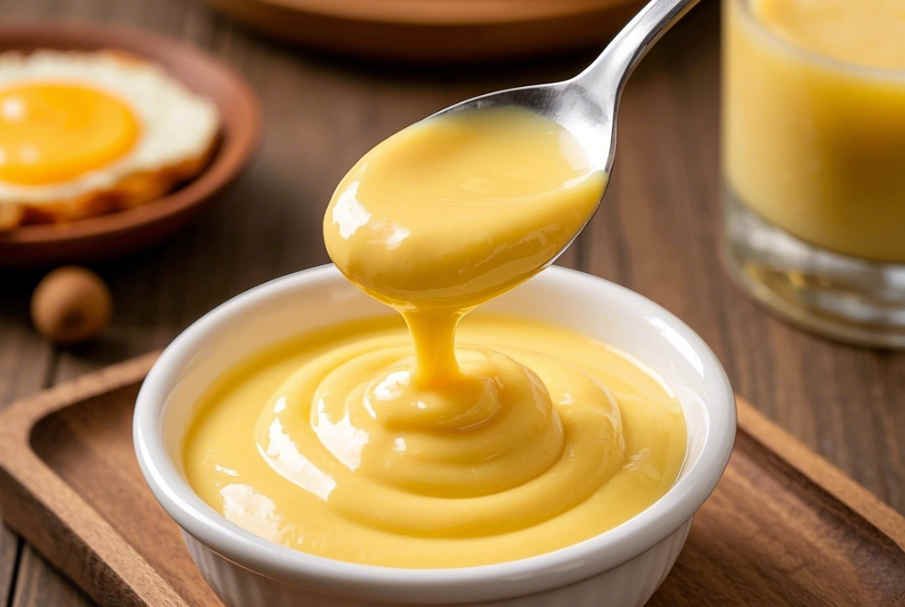
Yes. Rotary lobe pumps are commonly used for high-viscosity fluids such as syrup, honey, sauces, creams, and other viscous products.
Q3 Can a Rotary Lobe Pump Run Dry?
Continuous dry running is generally not recommended because mechanical seals and other components may be damaged. The allowable dry-running condition depends on the specific pump design and seal arrangement.
Q4 Can a Rotary Lobe Pump Handle Solids?
Many rotary lobe pumps can handle liquids containing suspended solids or soft particles. However, the maximum particle size, concentration, hardness, and required clearance should be considered when selecting the pump.
Q5 Are Rotary Lobe Pumps Self-Priming?
Many rotary lobe pumps have good self-priming capability, but the actual suction performance depends on pump design, speed, fluid viscosity, temperature, suction-line conditions, and the required suction lift.
Q6 What Materials Are Used for Rotary Lobe Pumps?
Common materials include stainless steel for wetted components, with different elastomers and mechanical seal materials selected according to the fluid and operating conditions. SS304 and SS316 are common options for different industrial and hygienic applications.
Q7 What Causes a Rotary Lobe Pump to Leak?
Common causes include worn or damaged mechanical seals, incorrect seal installation, excessive pressure, shaft misalignment, or wear of internal components. The specific cause should be identified before replacing components.
Q8 How Long Does a Rotary Lobe Pump Last?
The service life depends on operating conditions, fluid properties, pump speed, pressure, materials, maintenance, and wear. Proper pump selection and regular maintenance can significantly improve service life.
Conclusion
A rotary lobe pump is a versatile positive displacement pump designed for transferring viscous liquids, selected solids-containing fluids, and products requiring controlled handling. Its synchronized rotating lobes provide reliable fluid transport across a wide range of industrial applications.
When selecting a rotary lobe pump, it is important to evaluate fluid properties, flow rate, differential pressure, material compatibility, cleaning requirements, and operating conditions.
Choosing the right pump configuration can improve process efficiency, product quality, and equipment reliability while reducing maintenance costs.
If you are looking for a rotary lobe pump for your industrial application, consult a professional pump manufacturer(NEWAFLUIDS) with your fluid information, required flow rate, operating pressure, and temperature. These details will help determine the most suitable pump model for your process.