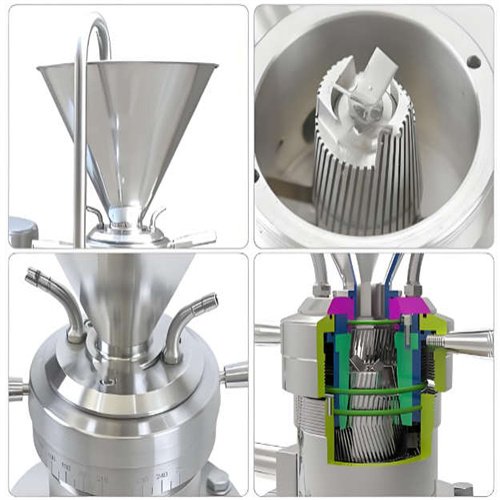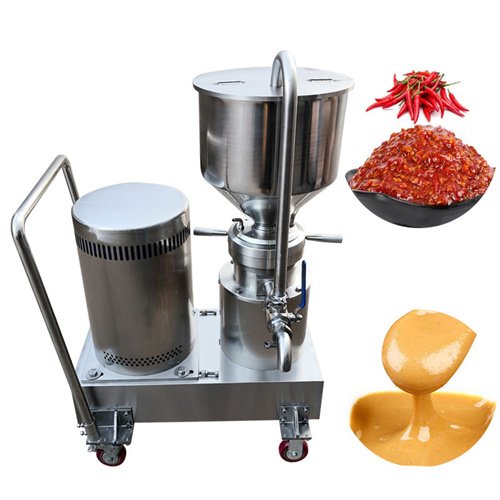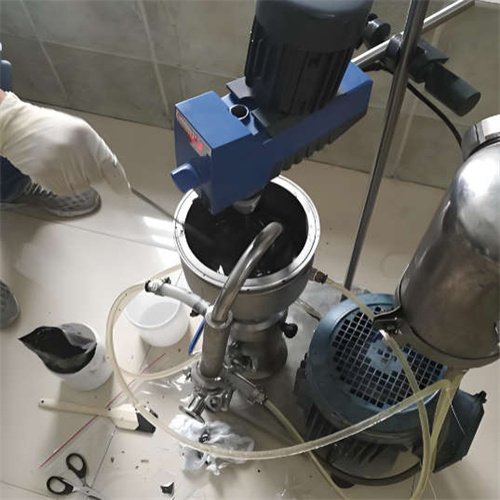

Key Features of Sanitary Colloid Mills (Non-Negotiable for Cosmetics, Food, Pharmacy)
What sets sanitary colloid mills apart is their uncompromising focus on hygiene, precision, and ease of use—features tailored to the unique needs of sensitive industries. Here are the core attributes to look for:
Food-Grade & Pharmaceutical-Grade Materials: All parts in contact with materials are made of 316L stainless steel (the gold standard) or 304 stainless steel. This material is corrosion-resistant, non-toxic, and easy to sanitize, with a mirror polish (Ra ≤ 0.8μm) to eliminate crevices where bacteria or product residue can accumulate. For pharmaceutical applications, 316L stainless steel is mandatory to meet GMP requirements.
Zero-Dead-Zone & CIP/SIP Compatibility: Sanitary colloid mills feature a seamless design with no grooves, threads, or gaps—eliminating dead zones where contamination can occur. They are fully compatible with CIP (Clean-in-Place) and SIP (Sterilize-in-Place) systems, allowing for thorough cleaning and sterilization without disassembly, reducing downtime and cross-contamination risks.
Precision Particle Size Control: With adjustable rotor-stator gaps (0.05–1mm), sanitary colloid mills deliver consistent particle sizes, ensuring product uniformity. This is essential for cosmetics (smooth creams, lump-free serums), food (creamy sauces, nut butters), and pharmaceuticals (uniform ointments, stable suspensions).
Thermal Control: High-speed shear generates heat, which can damage heat-sensitive ingredients like vitamins, active pharmaceutical ingredients (APIs), or cosmetic oils. Sanitary colloid mills often include water-cooled jackets to maintain precise temperatures, preserving ingredient integrity and product quality.
Technical Advantages of Sanitary Designs
| Feature | Advantage |
| 316L Stainless Steel | Maximum corrosion resistance and zero chemical leaching. |
| Adjustable Micron Gap | Allows operators to “dial-in” the exact texture needed. |
| Cooling Jackets | Prevents friction heat from degrading heat-sensitive nutrients or drugs. |
| Non-Drip Sealing | Prevents external contaminants from entering the product stream. |
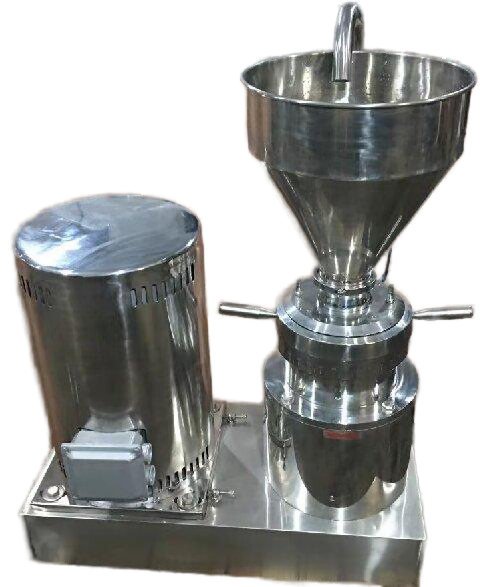
Industry-Specific Applications of Sanitary Colloid Mills
Cosmetics Industry
Cosmetics demand smooth textures, stable emulsions, and zero contamination—all of which a sanitary colloid mill delivers. Common applications include: face creams, lotions, serums,masks, shampoos, conditioners, and even make-up products like foundations and lipsticks. By reducing particle sizes to sub-micron levels, the mill ensures products absorb easily into the skin, have a luxurious feel, and remain stable (no separation) over time. For example, a high-shear sanitary colloid mill can turn raw oils and water into a stable emulsion that lasts for months, avoiding the need for excessive preservatives.
Food Industry
In food production, hygiene and consistency are paramount to meet FDA and food safety standards. Sanitary colloid mills are used for: nut butters (peanut, almond), sauces (mayonnaise, ketchup, hummus), dairy products (cheese, yogurt, cream), baby food, plant-based milks, and soups. They break down coarse particles (e.g., nuts, seeds) into smooth, uniform textures, improve mouthfeel, and extend shelf life by creating stable emulsions. Unlike traditional grinders, they handle high-viscosity materials without compromising hygiene or efficiency.
Pharmacy Industry
Pharmaceutical products require strict compliance with cGMP standards, as even minor contamination can render a product unsafe. Sanitary colloid mills are used to produce ointments, creams, gels, suspensions, syrups, and even APIs. They ensure uniform particle sizes, which is critical for dosage accuracy and drug efficacy. For example, in topical ointments, a uniform particle size ensures the active ingredient is evenly distributed, delivering consistent results. Many pharmaceutical-grade models also feature sterile designs and are compatible with SIP systems to meet the highest hygiene standards.
How to Choose the Right Sanitary Colloid Mill
With so many options available, selecting the right sanitary colloid mill for your business requires focusing on three key factors:
Regulatory Compliance: For pharmaceuticals and cosmetics, choose a mill certified by FDA, cGMP, and 3A. For food, ensure it meets FDA and food-grade standards. Avoid non-certified models—they risk regulatory fines and product recalls.
Capacity & Precision: Match the mill’s capacity to your production needs (lab-scale: 1–5 L/h; industrial-scale: 500–10,000 L/h). For high-end cosmetics or pharmaceuticals, opt for models with nano-grinding capabilities (≤1μm) for ultra-fine textures.
Maintenance & Support: Look for mills with easy cleaning, durable parts (e.g., hardened rotors), and reliable after-sales support. A mill with a long service life (core parts ≥8,000 hours) will reduce maintenance costs and downtime.