Understanding the Shampoo production machines
The shampoo production machines at this scale follows these essential stages:
- Raw Material Preparation: Accurate weighing and preparation of surfactants, conditioners, thickeners, preservatives, and active ingredients
- Heating and Mixing: Controlled combination of ingredients under specific temperature and shear conditions
- Homogenization and Deaeration: Creating uniform consistency and removing unwanted air bubbles
- Cooling and Quality Control: Bringing the batch to filling temperature while testing critical parameters
- Transfer and Filling: Moving finished product to filling equipment
- Packaging: Bottling, capping, labeling, and secondary packaging
Each of these stages requires specialized equipment.
Essential 500L Shampoo Production machines
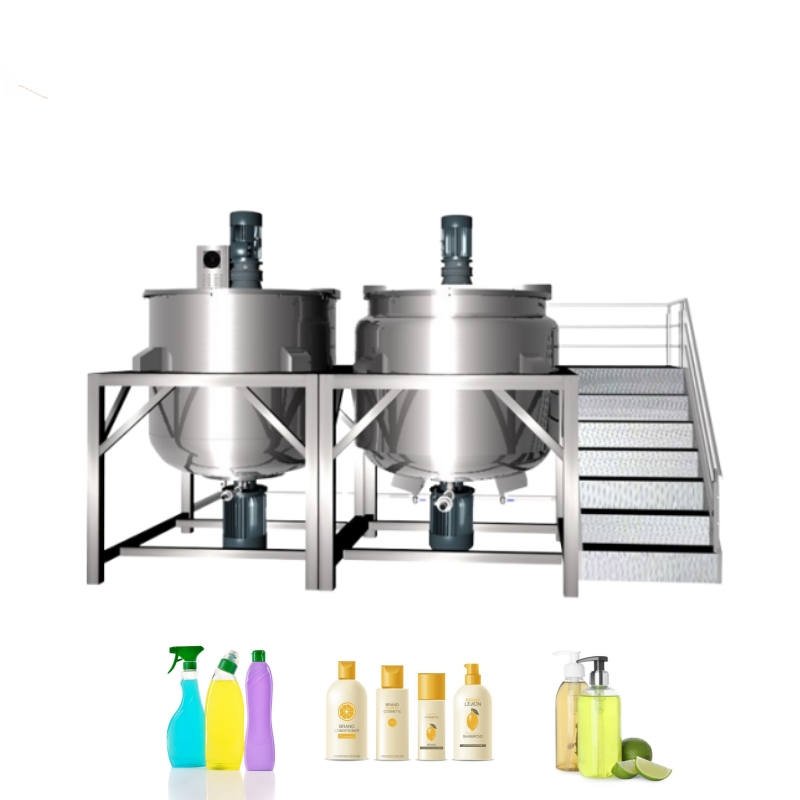
500L tank with Jacket heating
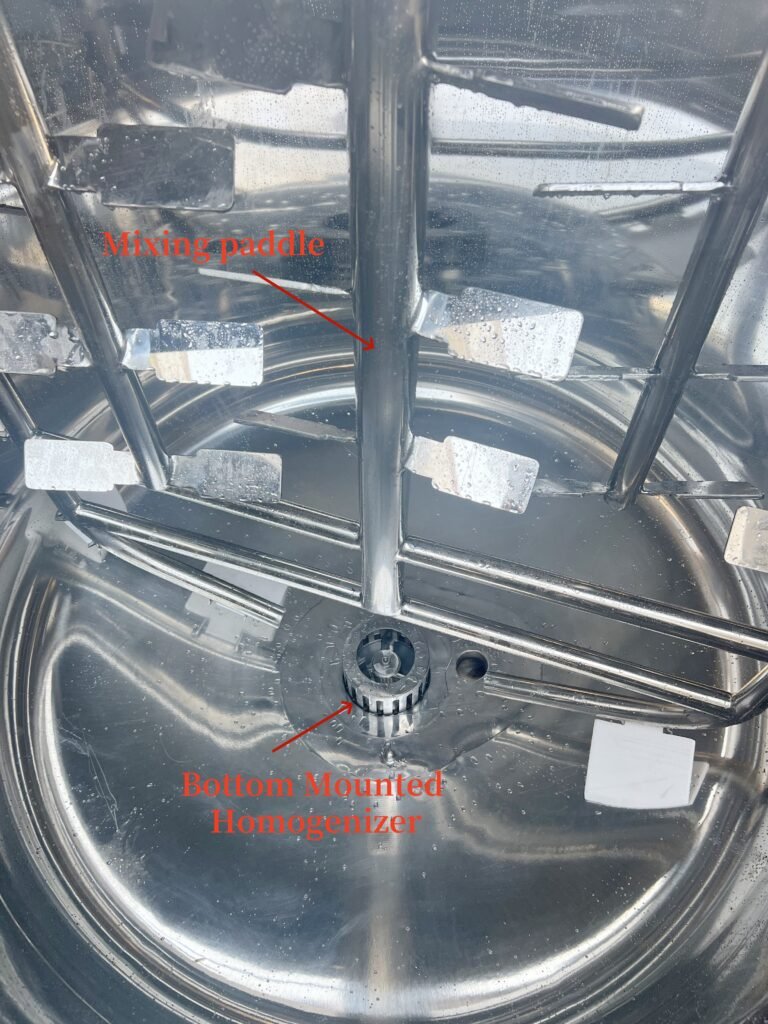
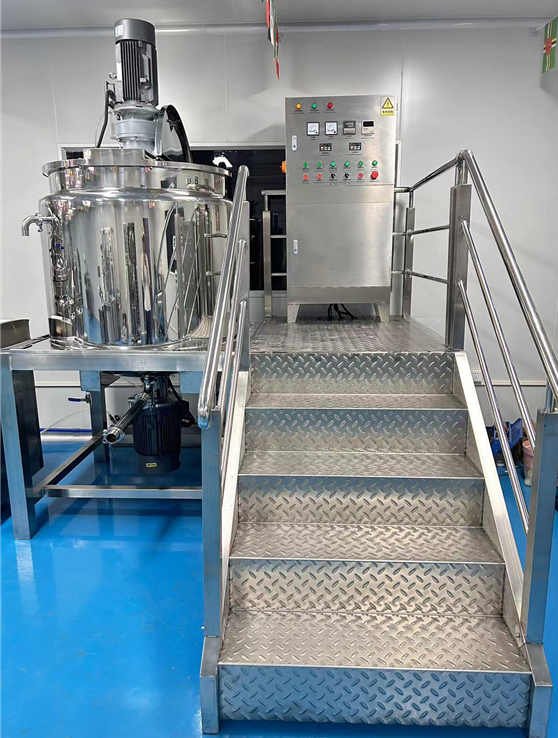
For 500L operations, jacketed stainless steel mixing tanks with integrated batch homogenizer are essential. Look for systems with:
- Dual-motion agitation combining high-speed disperser with anchor stirrer
- Heating and cooling capabilities through jacketed walls
- Variable frequency drive (VFD) controls for precise speed adjustment
- CIP (Clean-in-Place) systems for efficient cleaning between batches
- Vacuum capabilities for deaeration during or after mixing
Bottom Homogenizer
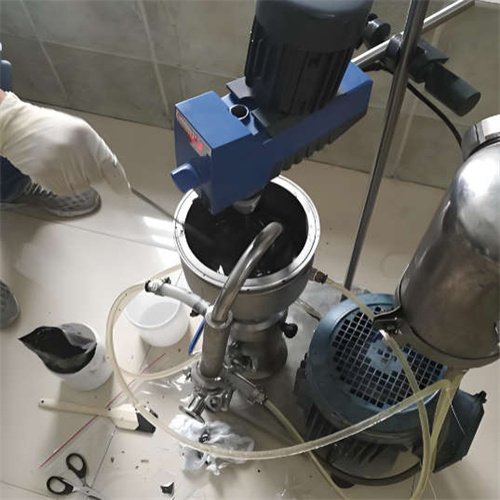
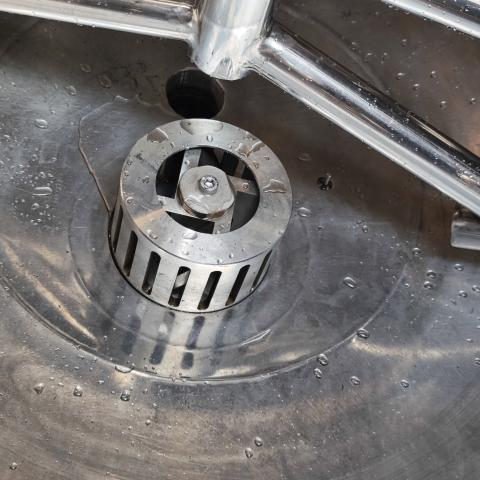
Ideal for small to medium-scale manufacturers, Bottom Homogenizers process a fixed volume of ingredients at a time. They offer flexibility, allowing you to switch between different shampoo formulations (e.g., anti-dandruff, moisturizing, volumizing) with minimal downtime. Most Bottom Homogenizers feature variable speed controls and customizable blades to handle different ingredient consistencies, from liquid surfactants to powdered thickeners.
Agitator Mixers
Shampoo production machine designed for small-scale industrial production, continuous agitator mixers process ingredients continuously, eliminating the need to stop and reload between batches. They’re highly efficient, with small to high throughput rates (up to 10,000 liters per hour) and automated controls to maintain consistency. Continuous agitator mixers are perfect for manufacturers producing high-volume, single-formula shampoos.
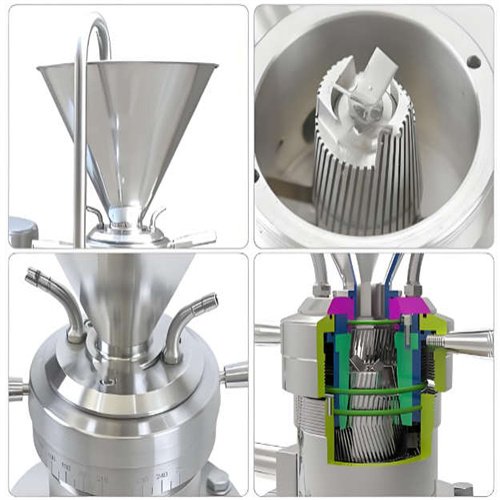
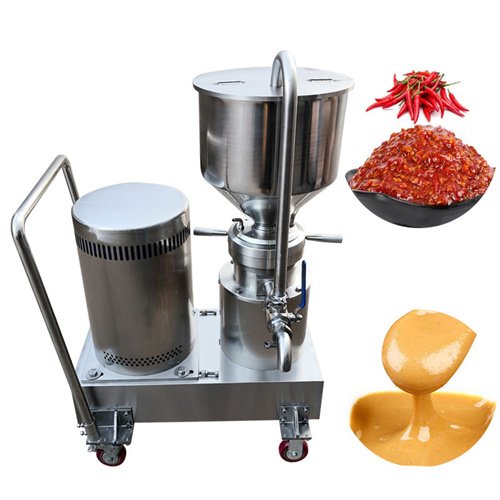
Bottom Homogenizers: Ensuring Smooth Texture and Stability
After mixing, bottom homogenizers are used to break down large particles and emulsify ingredients, creating a smooth, consistent texture. Shampoo is an emulsion of oil and water, and homogenization ensures these two phases stay mixed—preventing separation and ensuring the product remains stable throughout its shelf life. Homogenizers also improve the shampoo’s appearance, making it more appealing to consumers.
Complete 500L Shampoo Production machine Configurations
Working capacity: 500L,design capacity:560L
Heating method :electronic heating (water or oil) 27 kw
Motor : 380V 50Hz three phase
Top blending (0-63r/min) 3kw , bottom homgenizer (0-2880r/min)7.5kw
Electronic box parts:DELTA ,DELIX
500L tank: Three layer,double jackets Inner layer:4mm SUS316L Middle layer: 3mm SUS304, Heat preservation: Aluminum silicate Outer layer:2.5mm SUS304 Size:1150*1150*3200mm
Movable :with wheels
Cover:movable
Outlet: Stainless steel butterfly valve DN50
Polishing: mirror polishing 300U
FAQs About Shampoo Production Machines
How long does it take to set up a shampoo production machine?
Setup time depends on the complexity of the line. A small-scale shampoo production machine can be set up in 1 week, while a large-scale automatic line may take 4-8 weeks. This includes installation, testing, and training for your team.
Can I use the same machines for other personal care products?
Yes! Most shampoo production machines are versatile and can be used to produce other liquid personal care products, such as conditioner, body wash, hand soap, and lotion. This flexibility is a great way to expand your product line without investing in new equipment.
How often do shampoo production machines need maintenance?
Maintenance frequency depends on usage and machine type. Daily maintenance includes cleaning and sanitizing, while weekly maintenance involves checking for wear and tear. Monthly maintenance includes lubricating moving parts and inspecting electrical components. Annual maintenance (performed by a professional) ensures the machine operates at peak efficiency and extends its lifespan.
What is the lifespan of shampoo production machines?
With proper maintenance, high-quality shampoo production machines can last 10-15 years. Factors that affect lifespan include usage frequency, maintenance practices, and the quality of materials used in the machine.
Conclusion
Choosing the best shampoo production machines is a critical step in building a successful manufacturing business. By understanding your production needs, product formulations, and budget, you can select machinery that enhances efficiency, ensures product quality, and supports growth. Whether you’re a startup or an established manufacturer, investing in high-quality, reliable machines will pay off in the long run—helping you stay competitive in the growing global shampoo market.