Global Rotary Lobe Pump Market Overview (2026–2030)
The global rotary lobe pump market was valued at USD 890 million in 2025 and is projected to grow from USD 940 million in 2026 to USD 1.25 billion by 2030, registering a CAGR of 5.3% during the forecast period. Key factors driving growth include increasing hygiene standards in food and pharmaceutical sectors, rapid industrialization in Asia-Pacific, and the adoption of smart pump technologies. North America dominates the market with a 34.12% share, while Asia-Pacific is the fastest-growing region, fueled by China and India’s industrial expansion.
Key Lobe Pump Market Highlights
- 2026 Market Size: USD 940 million
- 2030 Projected Size: USD 1.25 billion
- CAGR (2026–2030): 5.3%
- Largest Regional Market: North America (34.12% share in 2025)
- Fastest-Growing Region: Asia-Pacific (CAGR 5.7%–6%)
- Top Application: Food and beverage (40% market share)
Global Lobe Pump Market Size & Forecast (2026–2030)
The global lobe pump market is expected to witness consistent growth over the next five years, driven by robust demand across key end-use industries. Below is a detailed breakdown of market size projections from 2026 to 2030.
Year-Wise Market Size (USD Million)
| Year | Market Size (USD Million) | Year-over-Year Growth |
|---|---|---|
| 2026 | 940 | 5.6% |
| 2027 | 995 | 5.8% |
| 2028 | 1,055 | 6.0% |
| 2029 | 1,120 | 6.2% |
| 2030 | 1,250 | 11.6% |
CAGR Analysis (2026–2030)
The global lobe pump market is projected to grow at a compound annual growth rate (CAGR) of 5.3% from 2026 to 2030. This growth is slightly higher than the historical CAGR of 4.8% (2021–2025), reflecting increasing adoption in emerging markets and technological advancements.
Lobe Pump Market Segment Size & Growth (2026–2030) by applications
Chemical: Steady growth (CAGR 4.9%), reaching USD 270 million by 2030. Used for handling corrosive and high-viscosity chemicals.
Food & Beverage: Dominant segment, projected to reach USD 500 million by 2030 (CAGR 5.5%). Driven by demand for sanitary pumps in dairy, beverages, and processed foods.
Wastewater Treatment: Second-largest segment, growing at CAGR 5.2%, reaching USD 330 million by 2030. Municipal and industrial wastewater projects drive demand for sludge-handling lobe pumps.
Pharmaceutical: Fastest-growing application segment (CAGR 6.1%), expected to hit USD 150 million by 2030. GMP compliance and sterile fluid transfer needs fuel adoption.
Lobe Pump Market Segment Size & Growth (2026–2030) by Region
- North America: Largest market (34.12% share in 2025), projected to reach USD 425 million by 2030 (CAGR 4.8%). Driven by strict FDA regulations and mature food/pharma industries.
- Europe: Second-largest market (25% share), growing at CAGR 5.0%, reaching USD 310 million by 2030. Strong demand from Germany, Sweden, and the UK for sanitary and industrial pumps.
- Asia-Pacific: Fastest-growing region (CAGR 5.7%–6.0%), expected to reach USD 415 million by 2030. China and India lead growth due to industrialization, urbanization, and food processing expansion.
- Middle East & Africa: Moderate growth (CAGR 4.5%), reaching USD 75 million by 2030. Driven by wastewater infrastructure projects and oil and gas sector demand.
- Latin America: Slowest growth (CAGR 4.2%), reaching USD 25 million by 2030. Economic volatility limits investment in industrial equipment.

Key Growth Drivers of the Global Lobe Pump Market (2026–2030)
Rising Hygiene Standards in Food & Beverage Industry
The food and beverage sector is the largest consumer of lobe pumps, accounting for 40% of the global market share. Strict hygiene regulations (e.g., FDA, EU Food Safety Authority) mandate the use of sanitary pumps with easy cleaning and contamination-free operation. Lobe pumps, especially stainless steel 316L models, meet these requirements, driving adoption in dairy, juice, sauce, and processed food production.
Expanding Pharmaceutical & Biopharmaceutical Sector
The pharmaceutical industry is the fastest-growing application segment for lobe pumps, with a CAGR of 6.1% from 2026 to 2030. Lobe pumps are critical for transferring sensitive products like active pharmaceutical ingredients (APIs), biological solutions, and cell cultures with minimal shear stress. Compliance with GMP standards and the growth of biopharmaceutical manufacturing further boost demand.
Growing Demand for Wastewater Treatment Solutions
Increasing global population, urbanization, and industrialization have led to a surge in wastewater generation. Lobe pumps are widely used in wastewater treatment plants for transferring sludge, thickened sewage, and industrial effluents. Government initiatives to improve water quality and expand wastewater infrastructure (e.g., EU’s Water Framework Directive, China’s “Sponge City” project) drive lobe pump market growth.

Technological Advancements & Smart Pump Integration
The integration of IoT (Internet of Things) and Industry 4.0 technologies is transforming the lobe pump market. Smart lobe pumps equipped with sensors for real-time monitoring of temperature, pressure, flow rate, and vibration enable predictive maintenance, reducing downtime and operational costs. Manufacturers are also developing energy-efficient models (e.g., Alfa Laval’s energy-saving lobe pumps reduce consumption by 25%) to meet sustainability goals.
Industrialization in Emerging Markets (Asia-Pacific)
The Asia-Pacific region, particularly China and India, is experiencing rapid industrialization, urbanization, and growth in food processing, chemical, and pharmaceutical sectors. Rising disposable incomes and demand for processed foods drive investment in food and beverage manufacturing, while government initiatives to improve infrastructure boost wastewater treatment projects. This makes Asia-Pacific the fastest-growing market for lobe pumps, with a CAGR of 5.7%–6.0% from 2026 to 2030.
Key Challenges Restraining the Global Lobe Pump Market (2026–2030)
High Initial Investment & Maintenance Costs
Lobe pumps, especially sanitary and smart models, have a higher upfront cost compared to alternative pumps like gear pumps or centrifugal pumps. Additionally, maintenance costs (e.g., replacement of lobes, seals, and bearings) can be significant, particularly for small and medium-sized enterprises (SMEs) in emerging markets. Nearly half of SMEs surveyed cited cost as a barrier to adoption.
Availability of Substitute Pump Technologies
The lobe pump market faces competition from alternative positive displacement pumps such as progressive cavity pumps, eccentric disc pumps, and external gear pumps. These pumps offer similar performance for certain applications (e.g., low viscosity fluids, simple sludge transfer) at a lower cost, limiting market penetration of lobe pumps.
Volatile Raw Material Prices
Lobe pumps are primarily manufactured using stainless steel (304, 316L), cast iron, and specialty alloys. Fluctuations in the prices of these raw materials, especially stainless steel, impact manufacturing costs and profit margins for pump manufacturers. This volatility can lead to price hikes for end-users, reducing demand in price-sensitive markets.
Stringent Regulatory Compliance
While hygiene regulations drive demand for sanitary lobe pumps, compliance with strict standards (e.g., FDA, EU Machinery Directive, GMP) increases manufacturing costs. Manufacturers must invest in high-quality materials, precision engineering, and testing to meet these standards, which can be challenging for small players.
Emerging Trends Shaping the Global Lobe Pump Market (2026–2030)
1. Rise of Sanitary & Hygienic Lobe Pumps
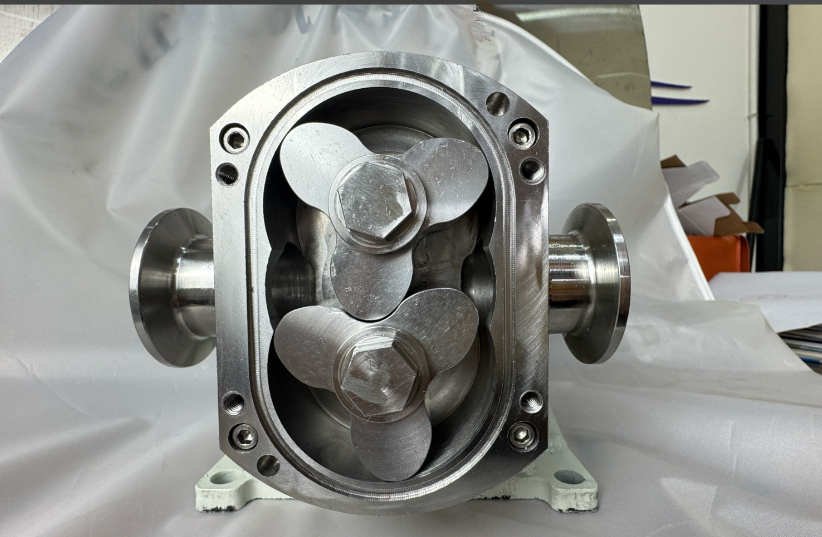
The demand for sanitary lobe pumps is growing rapidly, driven by strict hygiene standards in food, beverage, and pharmaceutical industries. Manufacturers are developing pumps with polished internal surfaces, CIP (Clean-in-Place) and SIP (Sterilize-in-Place) capabilities, and stainless steel 316L construction. The hygienic lobe pump segment is expected to grow at a CAGR of 5.8% from 2026 to 2030.
2. IoT-Enabled Smart Lobe Pumps
Smart lobe pumps integrated with IoT sensors and cloud-based monitoring systems are gaining traction in industrial applications. These pumps provide real-time data on performance, enable predictive maintenance, and optimize energy consumption. The adoption of smart lobe pumps is expected to grow at an annual rate of 20% during the forecast period.
3. Modular & Customizable Pump Designs
Manufacturers are focusing on developing modular lobe pumps that can be easily customized for specific applications (e.g., different lobe materials, flow rates, and pressure ratings). This flexibility reduces lead times and costs for end-users, driving adoption in niche industries like personal care, cosmetics, and biotech.
4. Focus on Energy Efficiency & Sustainability
With growing emphasis on sustainability and energy conservation, manufacturers are developing energy-efficient lobe pumps with optimized rotor designs, reduced friction, and lower power consumption. These pumps help end-users reduce their carbon footprint and operational costs, aligning with global sustainability goals.
5. Market Consolidation & M&A Activities
The global lobe pump market is witnessing increased consolidation, with major players acquiring regional and niche manufacturers to expand their product portfolios and geographic reach. For example, Alfa Laval acquired a leading sanitary pump manufacturer in 2024 to strengthen its position in the food and pharmaceutical sectors. This trend is expected to continue during the forecast period, leading to a more concentrated market landscape.
Conclusion
The global lobe pump market is set for steady growth from 2026 to 2030, driven by rising demand from food and beverage, pharmaceutical, wastewater treatment, and chemical industries. Technological advancements, including IoT integration and energy-efficient designs, will further fuel market expansion, while emerging markets in Asia-Pacific will drive the highest growth rates.
However, challenges such as high initial costs, substitute competition, and raw material price volatility may hinder market growth, particularly in price-sensitive regions. To capitalize on opportunities, manufacturers should focus on product innovation, cost optimization, and strategic partnerships to expand their geographic reach and product portfolios.