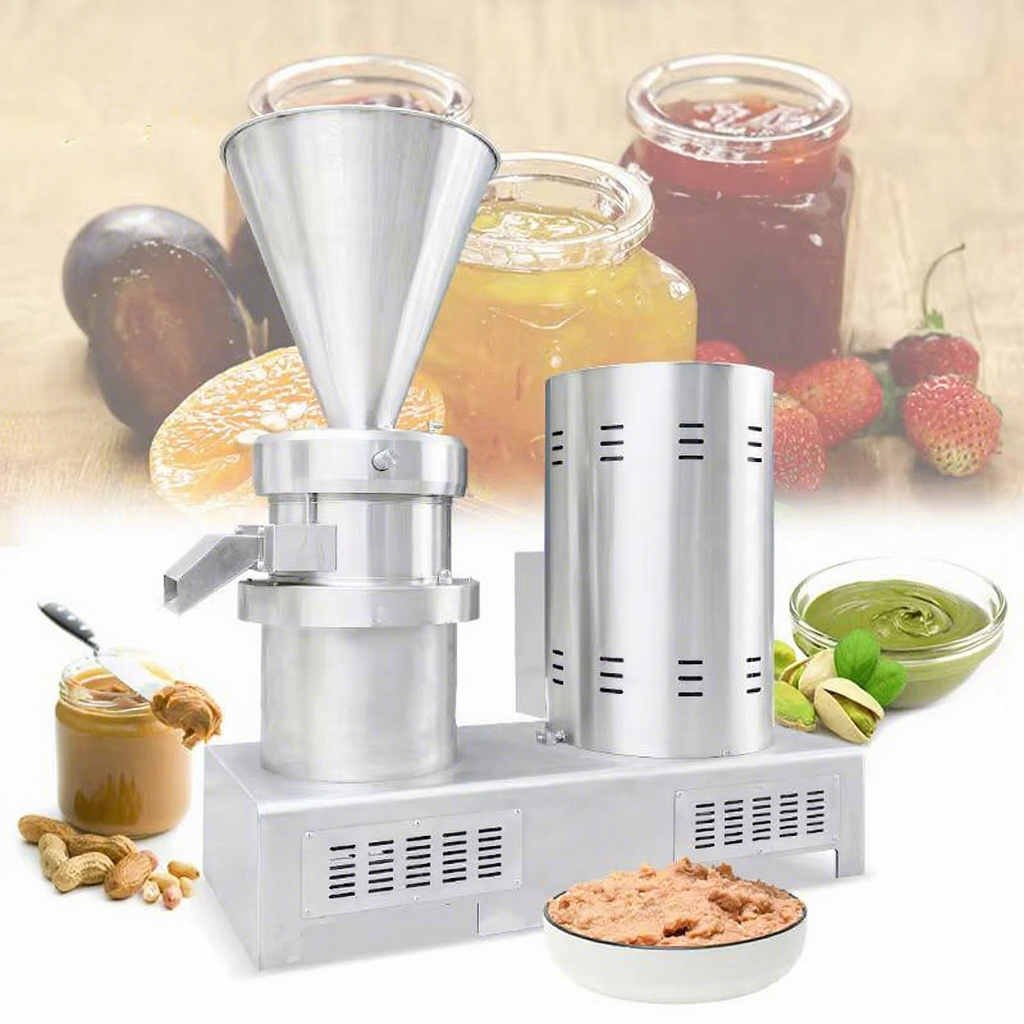
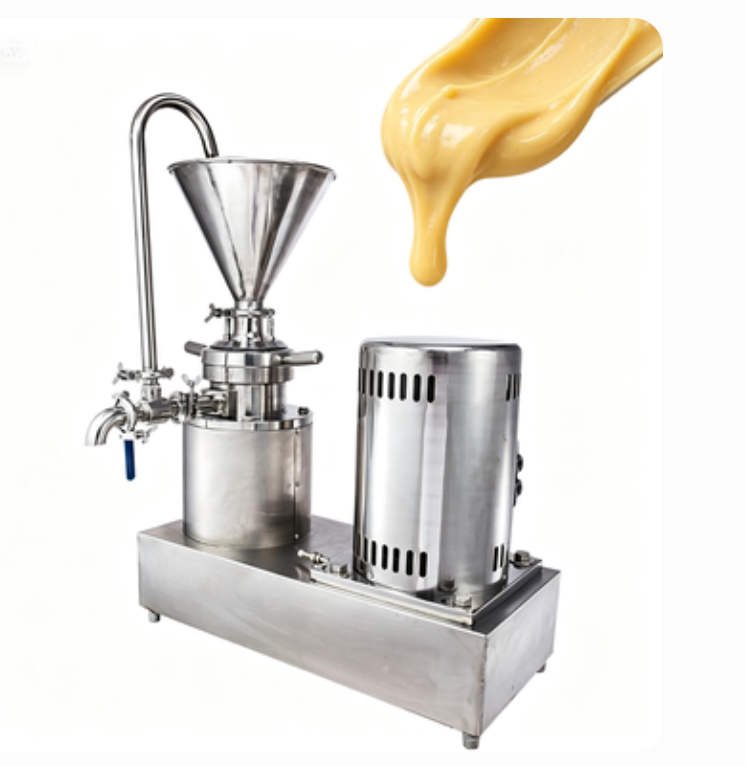
Mayonnaise is a high-viscosity, high-oil-phase emulsion food that requires high shear force but does not necessarily have a specific particle size. Mayonnaise Colloid mills, through strong shearing, friction, and extrusion between the stator and rotor, can quickly form a stable emulsion system. They offer high emulsification efficiency, good continuity, and strong adaptability to high-viscosity materials, making them the main equipment in most mayonnaise production lines.
Why Is Emulsification Critical in Mayonnaise?
Mayonnaise is a complex oil-in-water emulsion that requires extremely tight particle size control. The formula includes vegetable oil, egg yolk, vinegar, salt, sugar, and stabilizers. Without powerful wet grinding and high-shear processing, oil droplets cannot be evenly broken down and locked into the water phase. The result is unstable mayonnaise that separates inside packaging before the expiry date.
Challenges in Mayonnaise Production
- Maintaining stable oil-water dispersion
- Achieving uniform droplet size
- Preventing phase separation
- Ensuring consistent taste and mouthfeel
Why Traditional Mixers Always Cause Production Problems
Normal mixing tanks, paddle mixers, and simple high-speed stirrers only blend ingredients on a surface level. They cannot refine particle uniformity. Factories using old mixing equipment often face recurring issues: inconsistent batch texture, short shelf life, poor spreadability, and customer complaints about layered sauce. Manual correction takes extra labor, extra raw materials, and slows down the entire production line.
How a Mayonnaise Colloid Mill Works in Processing
The working principle of a Mayonnaise colloid mill is based on high-speed shearing, grinding, and mixing.
Step-by-Step Process
- Ingredient Feeding
Pre-mixed ingredients such as oil, egg yolk, vinegar, and seasonings are fed into the hopper.
- High-Speed Shearing
Then Mayonnaise colloid mill tears the oils into extremely small droplets under high shear.The rotor spins at high speed inside a stationary stator, creating intense shear forces.
- Particle Size Reduction
The mixture passes through a narrow adjustable gap, breaking down oil droplets into microscopic sizes. These micron-sized oil droplets are rapidly encapsulated by the phospholipids and proteins in the egg yolks, forming a stable interfacial film that is evenly dispersed in the aqueous phase (vinegar, lemon juice), thus forming a stable oil-in-water emulsion.
- Homogenization
It thoroughly breaks down the tomato cell walls, releasing more flavor compounds and lycopene, while grinding away coarse fibers and particles that might affect the texture to a barely perceptible degree. This results in a more delicate and uniform texture, bright color, moderate viscosity, and prevents separation or sedimentation during storage.
Key Production Benefits of Using a Mayonnaise Colloid Mill
Dramatically Reduce Emulsion Splitting and Product Waste
Unstable emulsions equal lost profit. Every split batch directly wastes oil, eggs, labor, and electricity. The precise mechanical emulsification from a Mayonnaise colloid mill locks oil molecules firmly in the continuous water phase. This greatly reduces separation during storage, transportation, and retail display. Factories cut waste rates and improve overall yield per ton of raw materials.
Extend Shelf Life Without Adding Extra Additives
Consumers now prefer clean-label mayonnaise with fewer artificial preservatives. A Mayonnaise colloid mill improves internal structural stability naturally. The tighter emulsion slows down oxidation, bacterial growth, and oil floating. Manufacturers can extend product shelf life while keeping ingredient lists short and clean, meeting modern food safety standards and market demands.
ower Labor Cost and Speed Up Batch Cycles
Mayonnaise Colloid mills integrate directly into automatic mayonnaise production lines. Once connected to feeding pumps and mixing tanks, the machine runs continuously without constant manual monitoring. One worker can manage multiple batches at the same time. Faster circulation grinding shortens each production cycle, increasing daily output without expanding workshop space.
Conclusion
In summary, Mayonnaise colloid mills, through ultra-micro processing and efficient emulsification, ensure the smooth texture, fully integrated flavors, and stable quality of sauces throughout their shelf life. Choosing a mayonnaise colloid mill for production is a smart investment for any food manufacturer aiming to improve product quality and efficiency. With its powerful shear force, adjustable control, and reliable performance, it ensures consistent emulsification and superior texture in every batch.