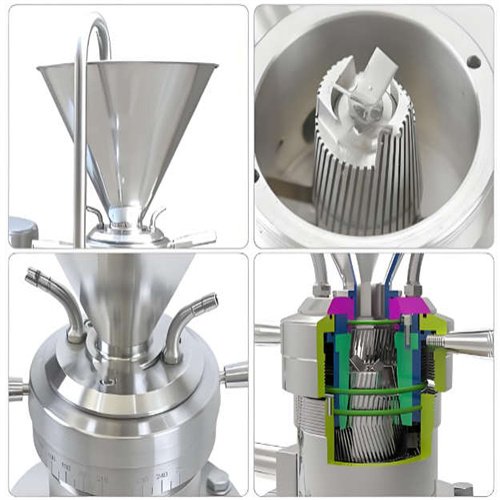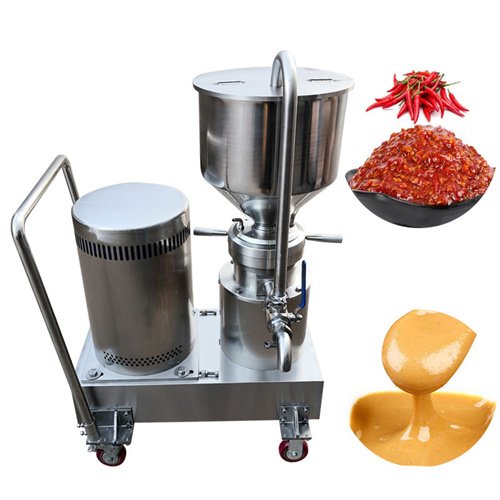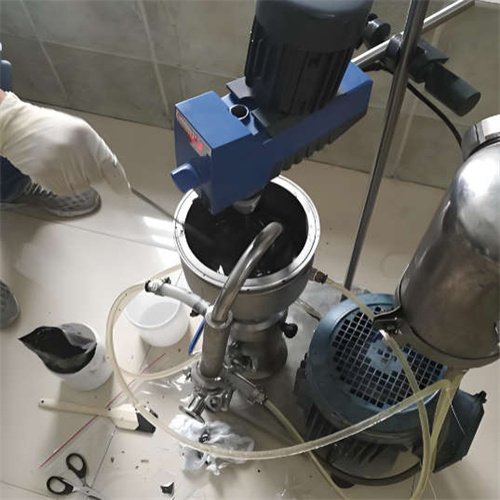
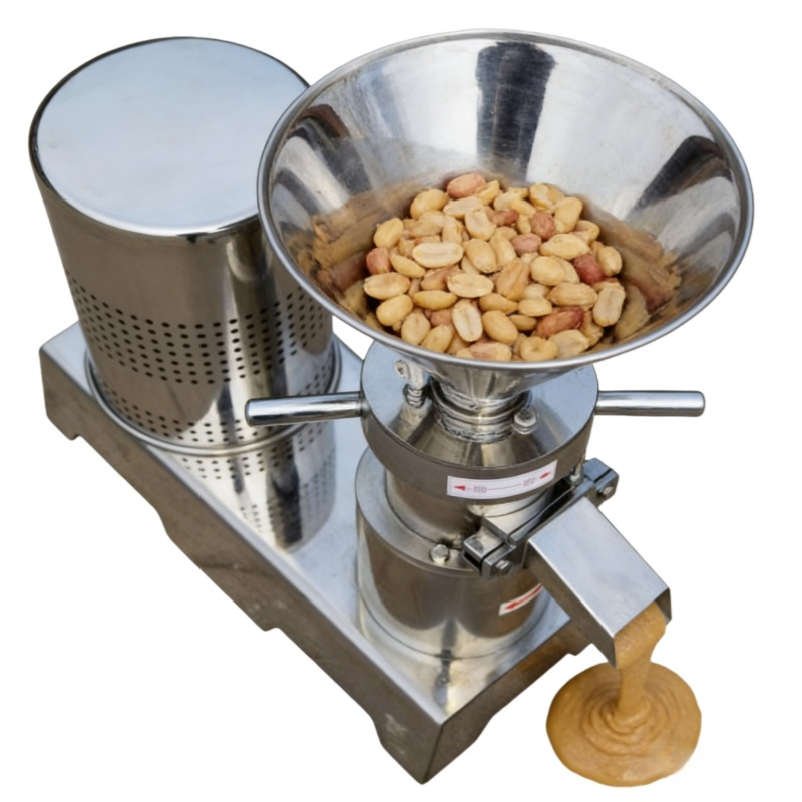
What fluids can a colloidal mill process?
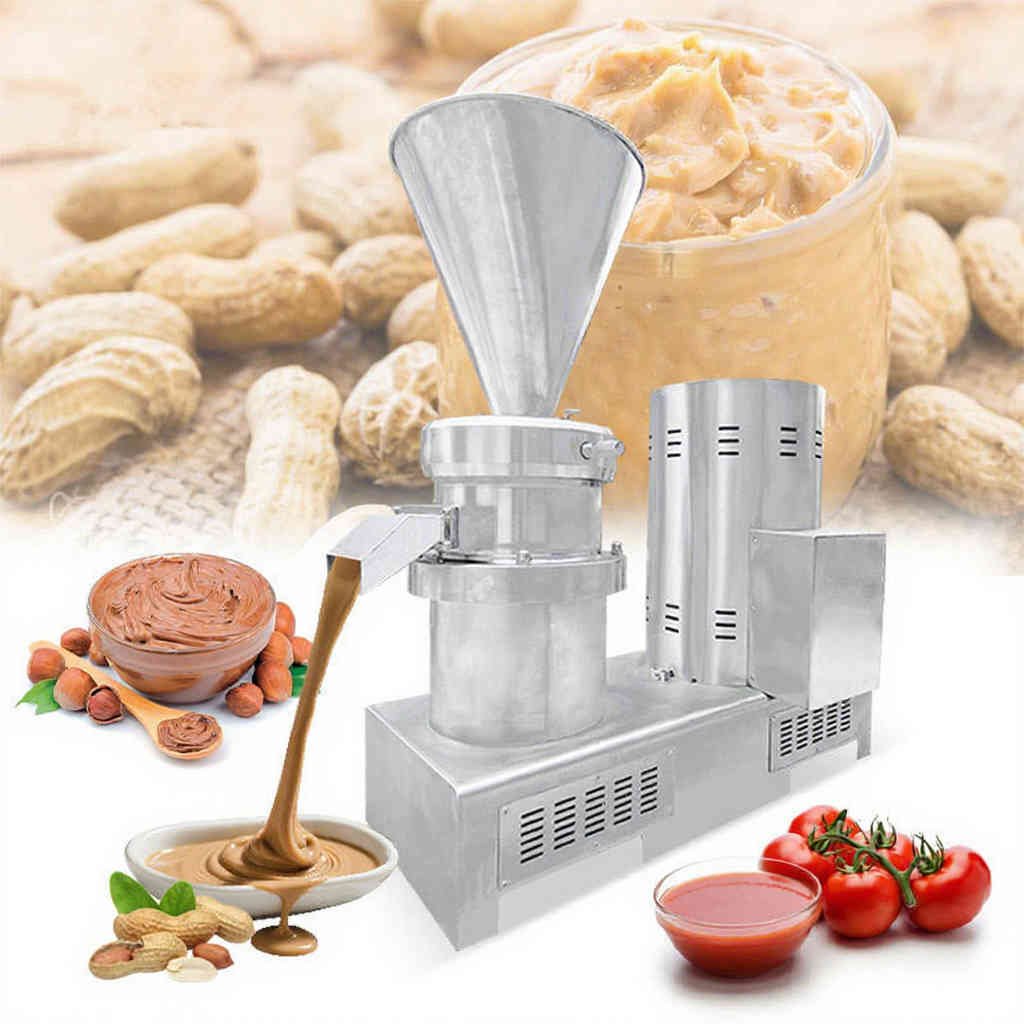
Suitable: Liquid, emulsion, paste, slurry (e.g., nut butter, chili sauce, toothpaste, paint, asphalt emulsion, pharmaceutical ointments).
- Liquid–liquid mixtures (emulsions).
- Solid–liquid mixtures (suspensions).
- Pastes and high-viscosity fluids.
- Shear-sensitive and temperature-sensitive products.
Not suitable: Dry powder, large hard particles (>500 μm, Mohs hardness >5), highly abrasive materials (sand, glass, metal chips).
Can It handle abrasive materials?
Yes, but it may cause wear on rotor/stator. Use:
- Hardened stainless steel or ceramic-coated surfaces.
- More frequent maintenance and part replacement.
- Consider a specialized mill design for highly abrasive slurries.
What’s the particle size range & can I adjust fineness?
Typical output: 2–40 μm.
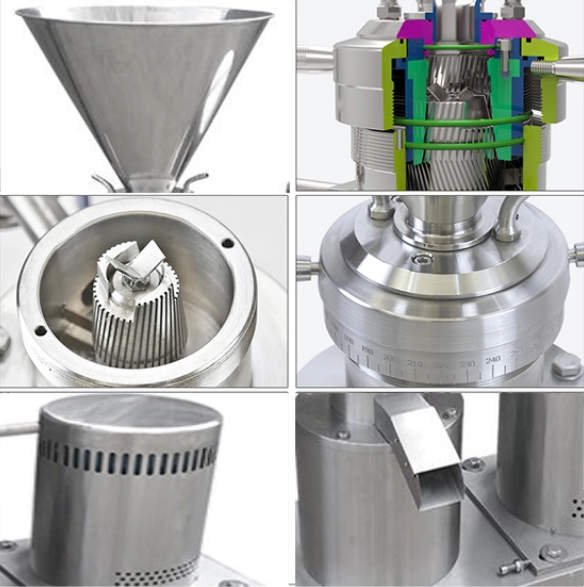
Adjustable: Change rotor‑stator gap (usually 2–10 μm) and motor speed (via VFD).
Can it run dry?
No. Never run dry >15 seconds. The rotor/stator and mechanical seal rely on the process fluid for lubrication/cooling; dry running causes seal burn‑out and rotor/stator damage.
Can it process hot materials?
Yes. Many industrial colloidal mills can handle hot materials, especially in food and chemical applications. However, excessive heat may affect product quality, so temperature control is often recommended.
Does it generate heat during operation?
Yes. High shear and friction naturally generate heat during processing.
For heat-sensitive products, cooling systems or circulation jackets may be used.
What’s the maximum viscosity the colloidal mill can handle?
Generally ≤10,000 mPa·s. Extremely high viscosity may cause feeding issues, overload, or blockage.

What’s the solid content limit?
Usually ≤6–10% (depends on model and particle size). Too high solid content accelerates wear and reduces efficiency.
Common problems & solutions
| Issue | Immediate Action | Long-Term Prevention |
| Inadequate size | Stop the machine and disconnect the power | reduce the clearance |
| Low Output | Check all gaskets and Tri-Clamp fittings | place the supply tank higher than the mill |
| Vibration | Check mounting bolts | Quarterly bearing inspection |
| OverHeating | Increase cooling flow | Optimize gap settings |
| Leaking | Replace mechanical seal | Install a seal flush system |
| Gritty Texture | Reduce feed rate | Replace worn rotor/stator |
| Metal-to-Metal Contact | Identify the “touching point” | Use the Limit Stop |
Is it sanitary for food/pharma?
Yes. Contact parts are 304/316L stainless steel, with food‑grade seals. Supports CIP/SIP cleaning, compliant with FDA/GMP.
What is the typical speed of a colloidal mill?
Most colloidal mills operate between 2,800 and 14,000 RPM depending on the design and application.
What are the common maintenance requirements?
- Regularly check and tighten rotor–stator assembly.
- Inspect seals and gaskets for wear.
- Clean after each use to prevent cross-contamination.
- Lubricate bearings and moving parts as per manual.
- Monitor motor amperage to detect clogging or wear.
Colloidal mill vs. high‑pressure homogenizer
- Colloidal mill: Lower cost, simpler maintenance, handles higher viscosity, lower pressure (2–3 bar), particle size 2–70 μm.
- High‑pressure homogenizer: Finer particles (<1 μm), higher pressure (100–1000 bar), higher cost, better for low‑viscosity emulsions.
Can it be customized?
Yes. Options include:
- Material: 304/316L SS.
- Voltage: 110V/220V/380V, 50/60Hz.
- Configuration: Horizontal/vertical, with wheels, cooling jacket, etc..
How long does a colloidal mill last?
With proper maintenance and correct operation, an industrial colloidal mill can last 10 years or more.
Regular maintenance includes:
- Bearing inspection
- Seal replacement
- Rotor/stator wear checks
- Lubrication
What is the difference between vertical, horizontal and inline Colloidal Mills?
| FEATURE | VERTICAL COLLOIDAL MILL | HORIZONTAL COLLOIDAL MILL | INLINE (PIPELINE) COLLOIDAL MILL |
|---|---|---|---|
| Primary Strength | Ease of cleaning & maintenance | Pumping ability & pressure generation | Space-saving, sealed integration |
| Flow & Feeding | Gravity-fed hopper or low-pressure feed | Positive pressure, straight-through flow | Direct in-pipeline integration |
| Best For Viscosity | Low to medium | Medium to very high | Low to high (depends on model) |
| Hygiene & Cleaning | Excellent (open, easy access) | Good (may require more disassembly) | Excellent (often full CIP/SIP) |
| Footprint | Small floor, needs height | Longer floor space | Most compact |
| Ideal Process | Batch & semi-batch | Continuous & recirculation | Continuous, sanitary lines |
| Air Entrainment | Potentially higher | Low | Very low |
What is the difference between a Colloidal Mill and a High pressure Homogenizer?
| FEATURE | COLLOIDAL MILL | HIGH-PRESSURE HOMOGENIZER |
|---|---|---|
| Principle | Rotor–stator shear | High-pressure forcing through a valve |
| Particle Size | 2–40 µm (can go submicron) | 0.1–1 µm (often smaller) |
| Viscosity | Handles very high viscosity | Best for low to medium viscosity |
| Heat Generation | Moderate (requires cooling) | Can generate heat (needs cooling) |
| Application | Creams, pastes, suspensions | Milk, juices, vaccines, nanoemulsions |
How to clean a Colloidal Mill?
- Disassemble rotor–stator if possible.
- Flush with water or solvent.
- Use CIP (Clean-in-Place) systems if available.
- Avoid abrasive cleaners on polished surfaces.
- Sanitize with steam or chemical agents (if compatible).