In the field of industrial fluid transportation, rotary lobe pumps are highly favored due to their unique structure and excellent adaptability to high-viscosity, particulate media. However, to fully realize their efficiency, the selection process must not solely focus on price or brand, but must return to a series of interrelated core technical parameters.
Understanding the Operating Conditions – The Foundation for Pump Selection
The most crucial step before buying a rotary lobe pump is not asking for a price, but thoroughly understanding your operating conditions. Key operating parameters include:
Media Characteristics: What medium is being pumped? What is its approximate viscosity? Extremely high or low temperatures will affect pump selection. High-viscosity media (such as syrup and asphalt) and low-viscosity media (such as water and gasoline) require completely different pump types, speeds, and clearance designs. If the medium contains solid particles, particle size and content must also be considered, directly determining the rotor type and clearance design.
Flow Rate and Head: How many cubic meters per hour need to be pumped? What is the required outlet pressure? These two parameters are core data for pump selection. However, don’t rely on experience for estimation; calculate comprehensively based on actual process requirements, combined with factors such as pipeline length, number of bends, and valve resistance.
Temperature Range: The medium temperature directly affects material selection and seal selection. High-temperature media have special requirements for sealing materials, bearing lubrication, and thermal expansion clearance.
Installation Environment: Indoor or outdoor? Are there explosion-proof requirements? What is the approximate altitude?
Once the operating parameters are clear, it’s like laying a solid foundation for pump selection; subsequent choices of materials, seals, and manufacturers will have a basis.
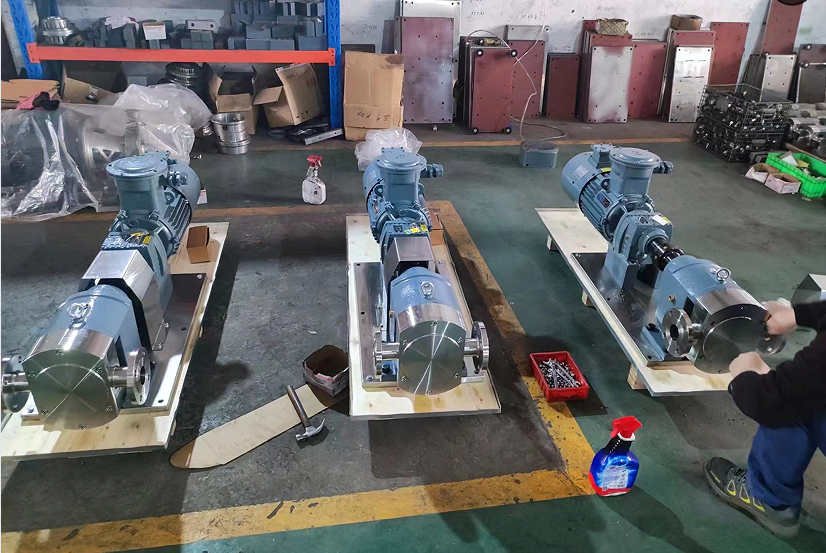
Material Selection – Don’t Let the Rotary Lobe Pump Become a Consumable
The core principle for selecting materials for rotary lobe pumps is “the medium determines the material.” Different media have vastly different corrosive effects on the pump body, rotor, shaft, and seals. Choosing the wrong material will lead to major repairs or even scrapping the pump in a short time.
Common Material Combinations:
- Carbon Steel: Suitable for ordinary water, oil, and non-corrosive media; low cost and high cost-effectiveness.
- Stainless Steel (304/316/316L): Suitable for food, pharmaceutical, and chemical applications requiring hygiene or corrosion resistance. 316L has a higher molybdenum content, providing stronger resistance to pitting and intergranular corrosion, making it suitable for chloride-containing or highly corrosive media.
- Special Materials: Such as duplex stainless steel, Hastelloy, etc., used in extreme corrosive conditions.
A customer we had previously purchased a rotary lobe pump that wasn’t made by us. After about six months, the pump body became severely corroded by the medium, becoming pitted and uneven, the rotor clearance increased, and the flow rate dropped by half. Upon disassembly, we found it was made of ordinary carbon steel, while his medium was weakly acidic. After replacing it with 316L steel, it ran under the same conditions for two years and is still in excellent condition.
Practical advice: If you are unsure about the corrosiveness of the medium, it’s best to conduct a compatibility assessment. Don’t just look at the pump body casing material; the materials of critical components such as the rotor, shaft, seals, and bushings are equally important.
Five key factors that determine the performance and lifespan of rotary lobe pumps
Delivery Capacity (Q): The Baseline for Matching Process Fluctuations
Delivery capacity refers to the volumetric displacement of the medium per unit time (commonly m³/h). Its core lies in “matching”—the minimum, normal, and peak demands of the production process must be comprehensively considered. Under-selection directly restricts production capacity; over-selection causes the pump to operate in an inefficient range for extended periods, leading to unnecessary energy consumption, increased medium temperature rise, and abnormal wear of the rotor and pump body. It is recommended to allow a reasonable margin based on calculated values and pipeline characteristics, but avoid blindly over-enlarging.
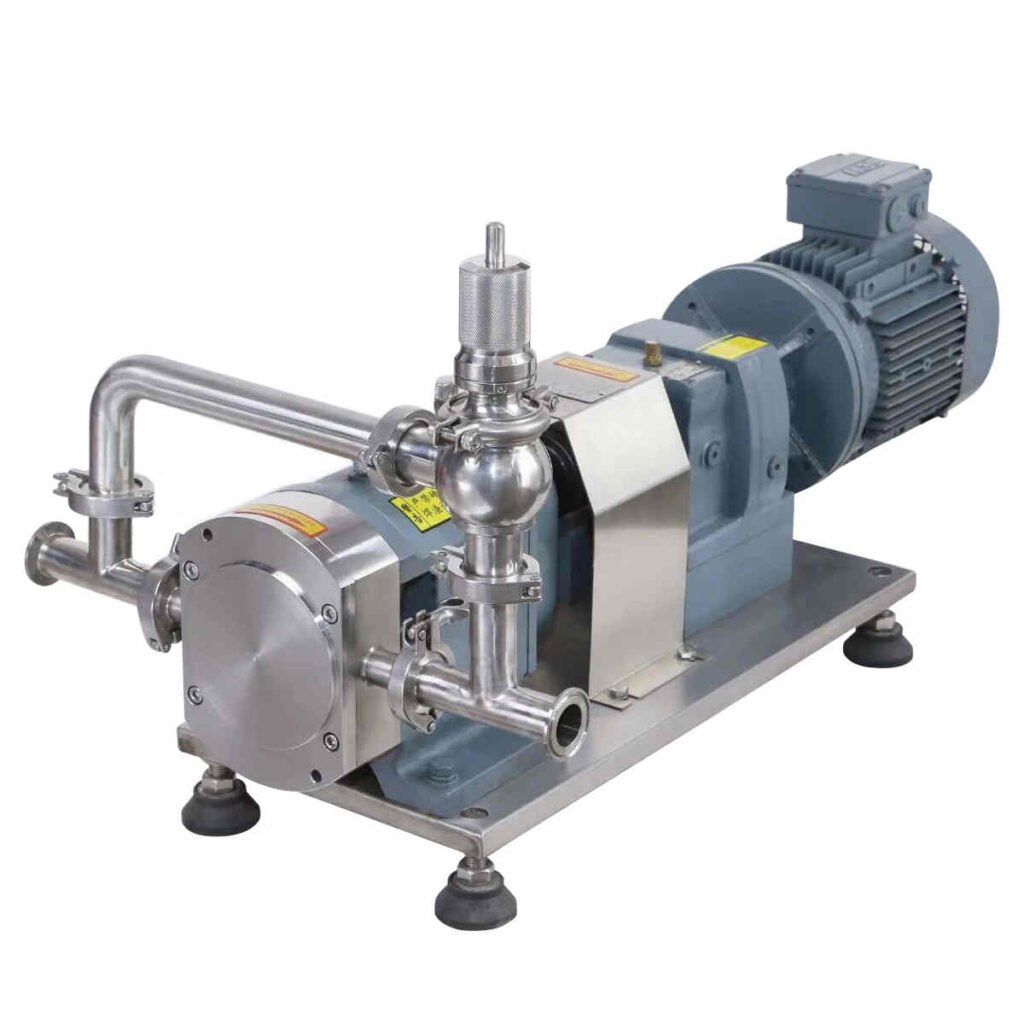
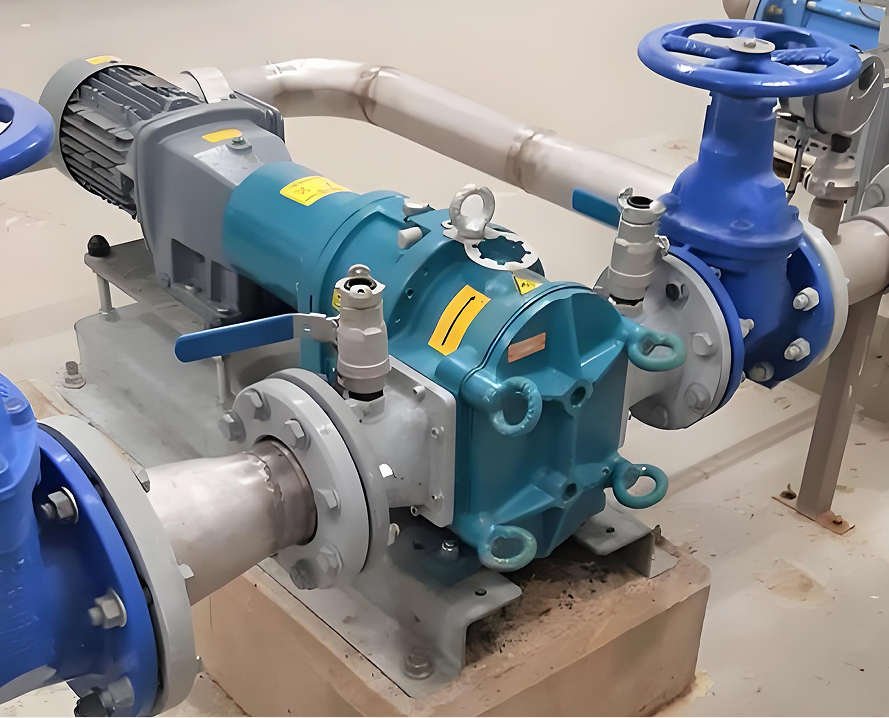
Pressure Head (H): The Energy Scale for Overcoming System Resistance.
Pressure head represents the mechanical energy a rotary lobe pump can impart to a unit weight of liquid, used to overcome friction along the pipeline, local resistance from elbows and valves, and pressure differences between inlet and outlet (unit converted to meters of liquid column). Accurate calculation of the total resistance of the entire pipeline system at the target flow rate is required during selection. Note: The flow rate and pressure head of a rotary lobe pump are inversely related on the characteristic curve. The rated pressure head of the selected pump should be slightly higher than the actual system requirements, rather than simply selected based on the maximum static pressure difference.
Rotational Speed (n): The Adjustment Center for Performance and Lifespan.
Rotational speed directly affects the pump’s output capacity, vibration noise, and component durability. Key principles include: Flow Rate ∝ Rotational Speed
Pressure Head ∝ Rotational Speed²
Shaft Power ∝ Rotational Speed³ Higher rotational speeds can increase delivery capacity but will exacerbate friction between the rotor and pump chamber, increase seal load and cavitation risk, and shorten maintenance cycles; lower rotational speeds are beneficial for handling shear-sensitive media, reducing pulsation, and extending lifespan. Therefore, while meeting process flow requirements, the lowest reasonable speed that meets the needs should be prioritized to achieve a balance between performance and reliability.
Input Power and Conversion Efficiency (P, η): Indicators Determining Long-Term Operating Costs
Shaft Power: The actual mechanical power consumed to drive the rotary lobe pump (kW).
Efficiency: The ratio of effective power obtained by the liquid to shaft power (η = Pe/P × 100%).
Efficiency directly reflects the level of hydraulic losses, volumetric leakage (rotor clearance), and mechanical friction (bearings, seals) within the pump. When selecting a rotary lobe pump, the supplier should be requested to provide efficiency values for commonly used operating points, and models with high efficiency in that region should be prioritized. High efficiency not only saves on electricity costs but also often means more precise manufacturing clearances and better flow channel design.
Positive Caustic Head (NPSHr): The Safety Threshold to Prevent Cavitation Damage
NPSHr is the minimum inlet pressure margin required by the rotary lobe pump itself to prevent internal cavitation (the formation of bubbles in the low-pressure area of the liquid, which then collapses and impacts the metal surface in the high-pressure area). This is an inherent property of the rotary lobe pump, determined by its structure and speed. Key Criterion: The effective net positive suction head (NPSHa, determined by the installation environment) of the system must be greater than the pump’s NPSHr, and a safety margin of 0.5-1m or more is typically allowed. Once NPSHa ≤ NPSHr, the pump will rapidly experience cavitation, manifesting as severe vibration, noise, and a decrease in flow rate, quickly leading to pitting and even penetrating damage to the rotor and rotary lobe pump casing. For applications involving hot media, high-saturation vapor pressure media, or installations at high altitudes, even more stringent calculations are required.
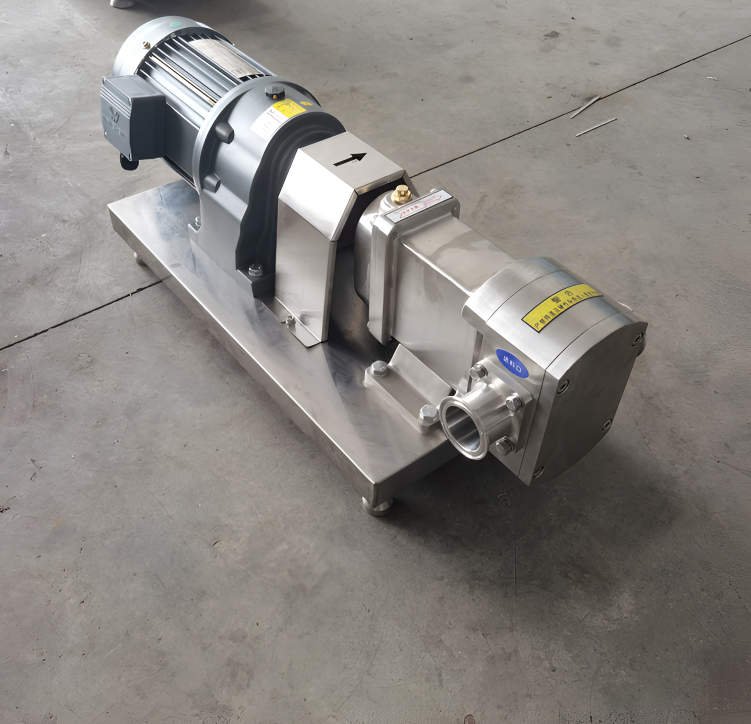
NEWAFLUIDS rotary lobe pumps
NEWAFLUIDS rotary lobe pumps are to be found in numerous processes, where their reliable low shear flow characteristics are ideally suited to the transfer of media with high density, high soild or high viscosity. We select the pump according to your characteristics of medium and condition of the technological
requirements, bring you the best pump for your critical process, satisfied by you and your customers. Over the years, NEWAFLUIDS has been focused on
communication with customers and constantly optimize our pumps to be ow maintenance, long-life cycle and environmental friendly, so far we has been developed to the fourth generation pumps.
| Model | Displacement (L/r) | Rotation Speed (r/min) | Flow Rate (M³/h) | Dischage Pressure (Mpa) | Electrical Power (Kw) | Suc. Pressure (Mpa) | Inlet & Outlet (mm) |
|---|---|---|---|---|---|---|---|
| NW25 | 0.15 | 0-600 | 2 | 0.1-1.2 | 0.55-2.2 | -0.095 | 25 |
| NW40 | 0.32 | 0-550 | 5 | 0.1-1.2 | 1.5-4 | -0.095 | 40 |
| NW50 | 0.65 | 0-550 | 10 | 0.1-1.2 | 2.2-7.5 | -0.095 | 50 |
| NW65 | 1.74 | 0-550 | 20 | 0.1-1.2 | 4-15 | -0.095 | 65 |
| NW80 | 2.48 | 0-550 | 30 | 0.1-1.2 | 5.5-22 | -0.095 | 80 |
| NW100 | 3.65 | 0-550 | 40 | 0.1-1.2 | 7.5-30 | -0.095 | 100 |
| NW125 | 4.60 | 0-550 | 50-80 | 0.1-1.2 | 11-45 | -0.095 | 125 |
| NW150 | 11.56 | 0-420 | 120 | 0.1-1.2 | 22-90 | -0.095 | 150 |