
What Is a High Shear Mixer?
A high shear mixer is a device used to break the interface between two immiscible liquids (such as oil and water) by external force, so that one phase is uniformly dispersed into the other phase to form a stable emulsion . Its core mechanism is to use eddy mixing, shearing, and ultrasonic techniques to break the liquid interface by high-speed shearing force generated by equipment such as Inline high shear mixer, Batch high shear mixer, colloid mills or high-pressure homogenizers, so as to achieve the fine crushing and uniform mixing of water flocs and liquids such as diesel, and form an emulsion structure .


The emulsification effect of the high shear mixer is the result of the combined action of equipment structure, energy transfer, operating parameters and auxiliary systems. Its purpose is to achieve the crushing, dispersion and stable suspension of droplets. The core working unit is the key to energy conversion. The high-speed shearing component provides energy through mechanical force and fluid force. The stator-rotor structure is widely used. Its design usually includes tooth structure, multi-stage shearing and high speed. The multi-stage shearing structure adopts a combination of pre-shearing, main shearing and fine shearing to improve crushing efficiency.
Whether you manufacture food and beverages, pharmaceuticals, cosmetics, or specialized chemicals, understanding high shear technology is essential for optimizing throughput and ensuring batch-to-batch repeatability.


The most common high shear mixer uses a rotor-stator system. The rotor rotates at high speed inside or near a stationary stator. As the material passes through the narrow gap between the rotor and stator, it experiences intense mechanical shear.
This action can:
- Break down agglomerated particles
- Disperse powders into liquids
- Create stable emulsions
- Reduce particle size
- Improve product uniformity
- Accelerate mixing processes
- Help prevent sedimentation and separation
Working Principle of a High Shear Mixer
The process takes place across four distinct stages:
[ Fluid Intake ] ➔ [ High-Speed Rotor Action ] ➔ [ Shear Gap Stress ] ➔ [ Stator Expulsion ]
Suction & Fluid Intake
The high-speed rotor spins at high speeds typically ranging from 1450-2900rpm. This high rotational velocity creates a powerful suction (a vacuum effect) at the bottom or center of the mixing head, drawing liquid and solid ingredients into the rotor-stator workhead.
Centrifugal Acceleration
Centrifugal force accelerates the materials toward the outer edge of the workhead. As the ingredients pass between the rotating blades, they are subjected to initial mechanical shearing.
Intense Hydraulic Shearing
Materials are driven through precision-machined openings (slots, perforations, or mesh screens) in the stationary stator. The extremely tight gap between the rotor tip and the stator wall—often measured in thousandths of an inch—subjects the fluid to intense hydraulic and mechanical shear stress.
Expulsion & Circulation
The processed material is forcefully expelled radially through the stator perforations back into the bulk mix at high velocity. This creates a high-energy circulatory pattern within the vessel, continually pulling fresh material back through the workhead until a uniform mixture is achieved.
Types of High Shear Mixers
Batch High Shear Mixers
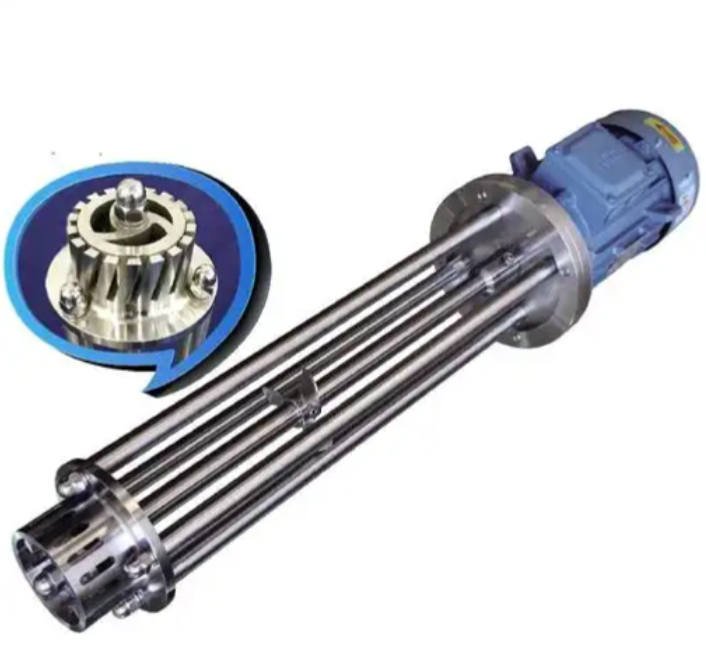
A batch high shear mixer processes materials in a single vessel, using a high-speed rotor-stator system to generate intense shear forces. It is ideal for mixing, emulsifying, dispersing, and homogenizing liquids, powders, and other ingredients. Common applications include cosmetics, pharmaceuticals, food processing, and chemical production.
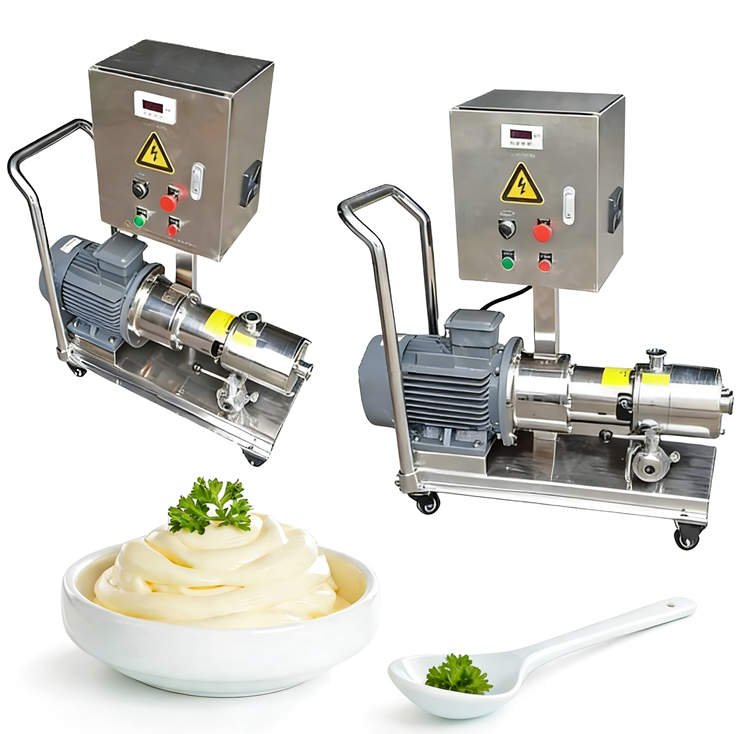
Inline High Shear Mixers
These are continuous processors. The material is pumped through the mixer head as it flows through a pipe.
- How it works: A pump forces the product through the rotor-stator. The product exits the mixer completely processed in one pass (or multiple passes in a loop).
- Pros: High throughput, no air entrainment, perfect for closed systems.
- Cons: Requires a pump; more complex for high-viscosity materials.
- Best for: Large-scale production, sterile environments, continuous manufacturing.

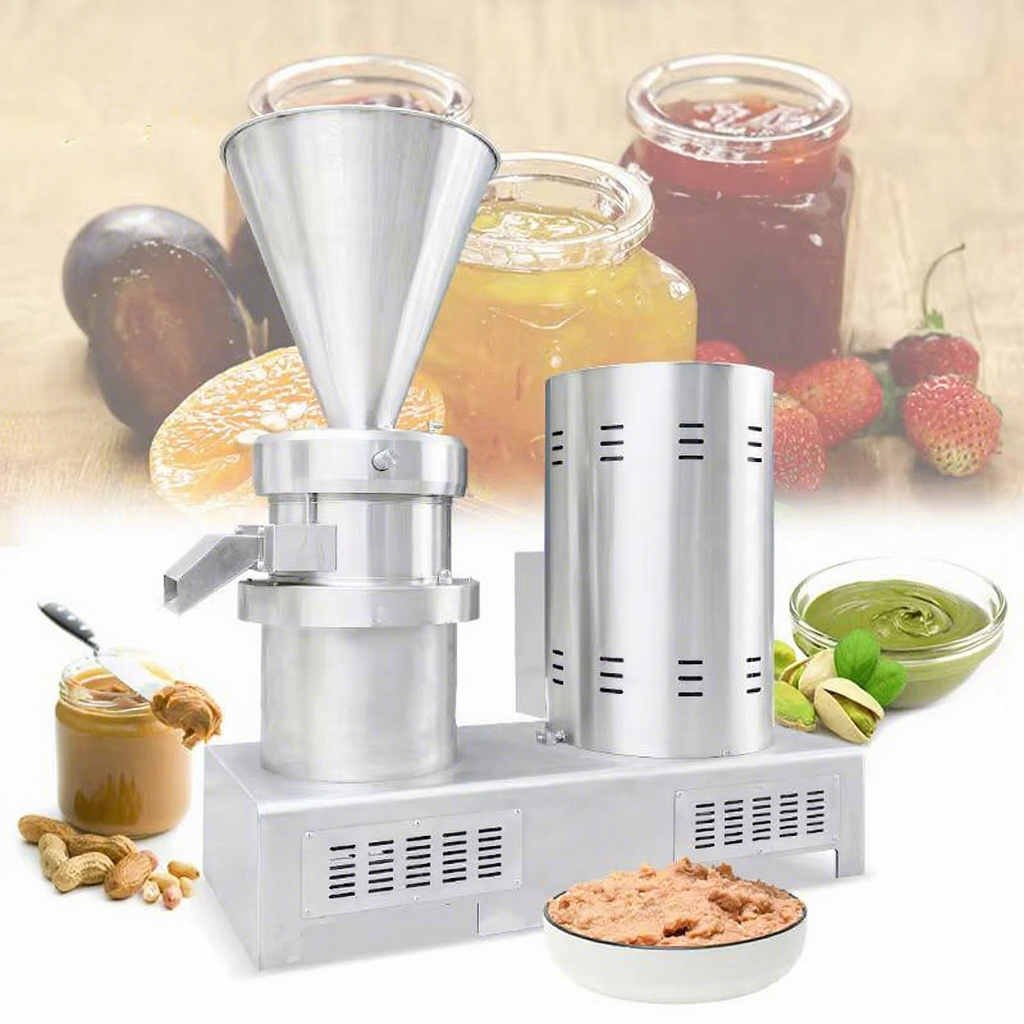
Colloid mill
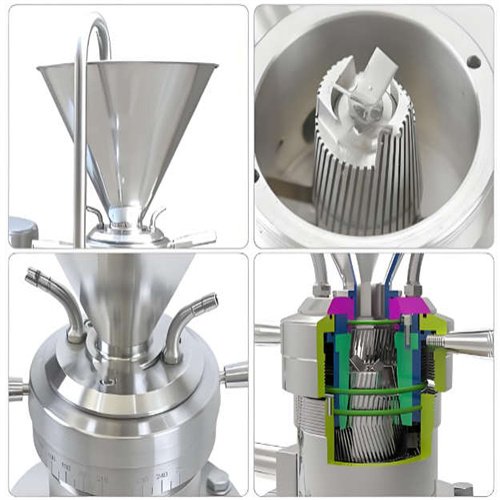
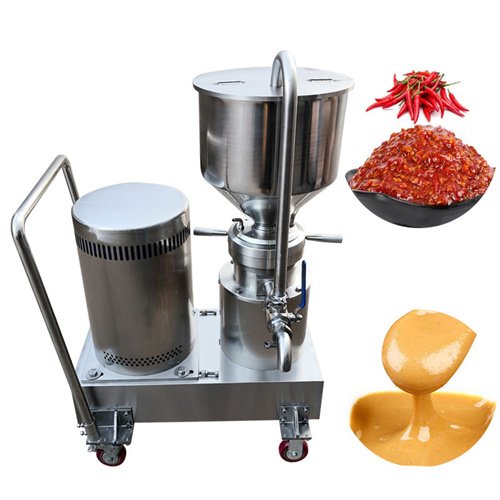
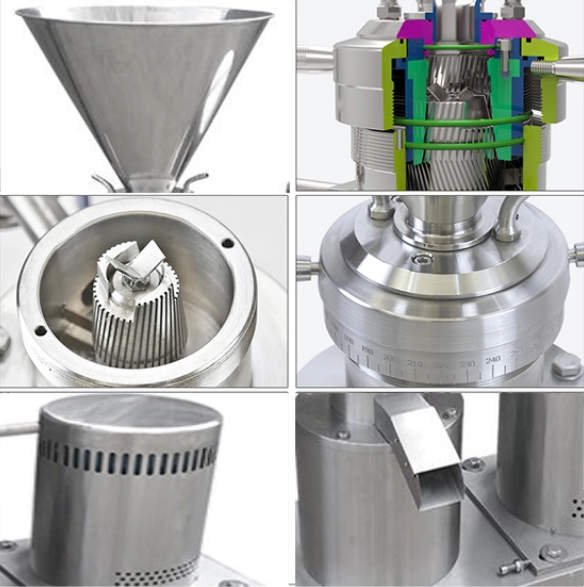
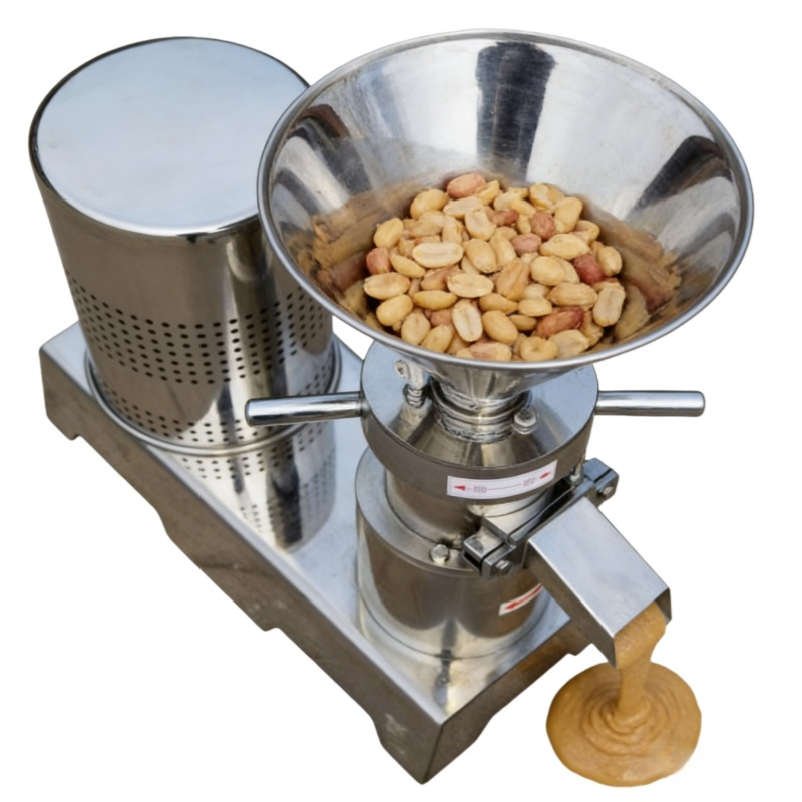
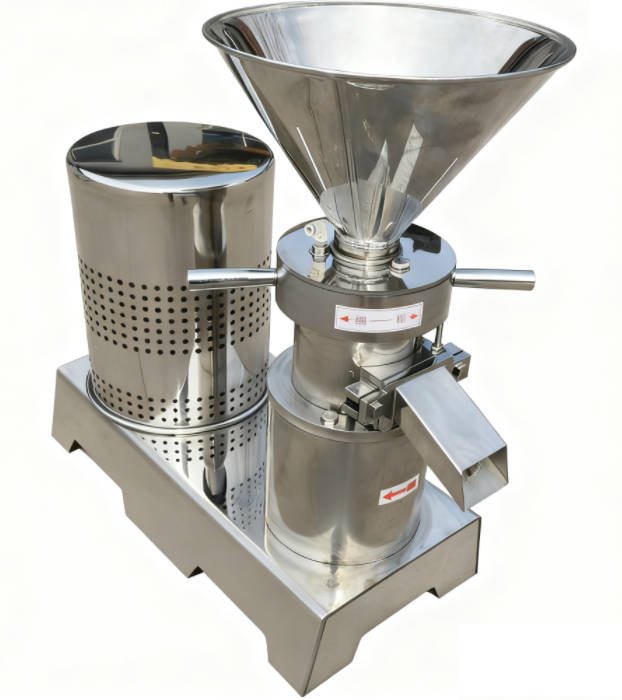
A colloid mill reduces particle size and creates fine dispersions by forcing materials through a narrow gap between a high-speed rotor and a stationary stator. It is particularly effective for producing stable emulsions, fine suspensions, and smooth, uniform products. Common applications include sauces, nut butter, creams, ointments, and other viscous materials.
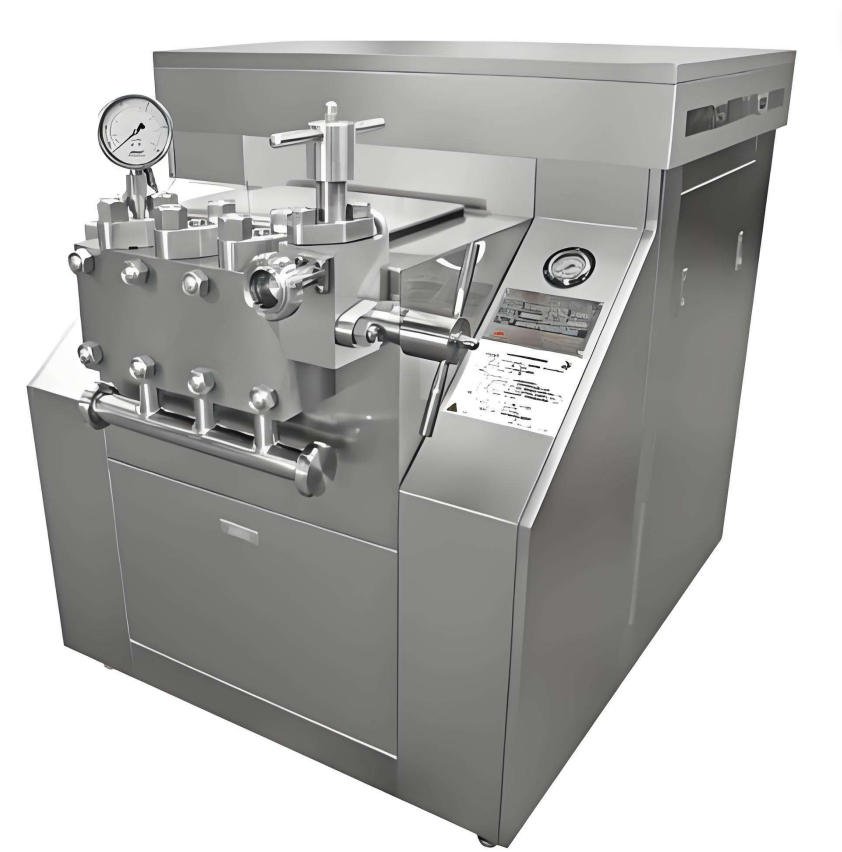
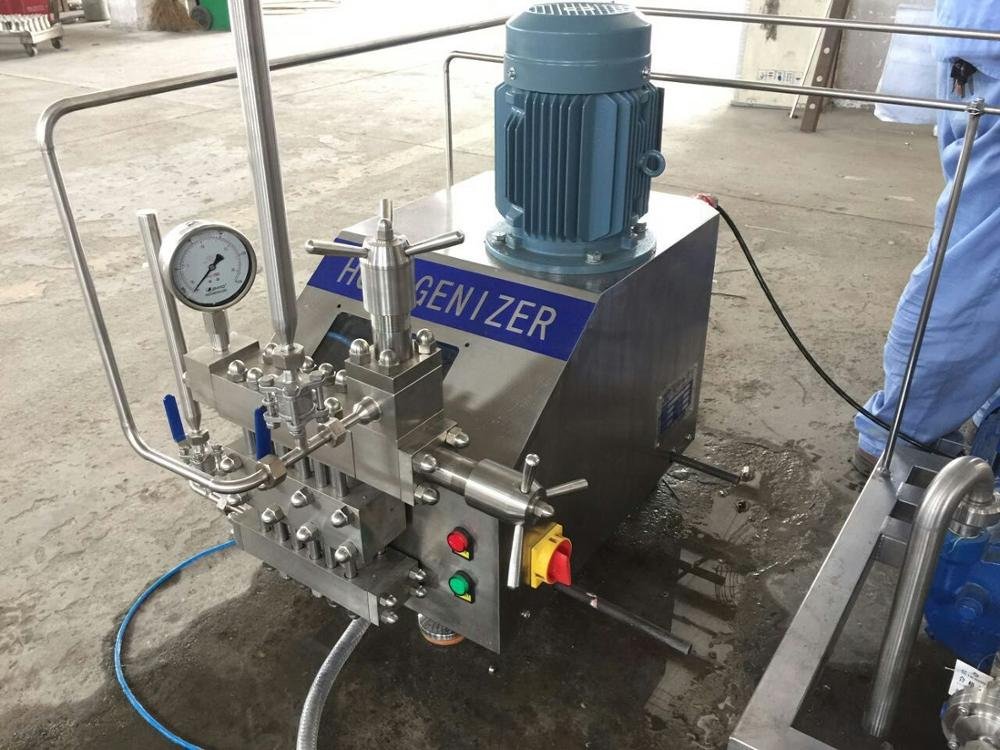
High Pressure Homogenizer
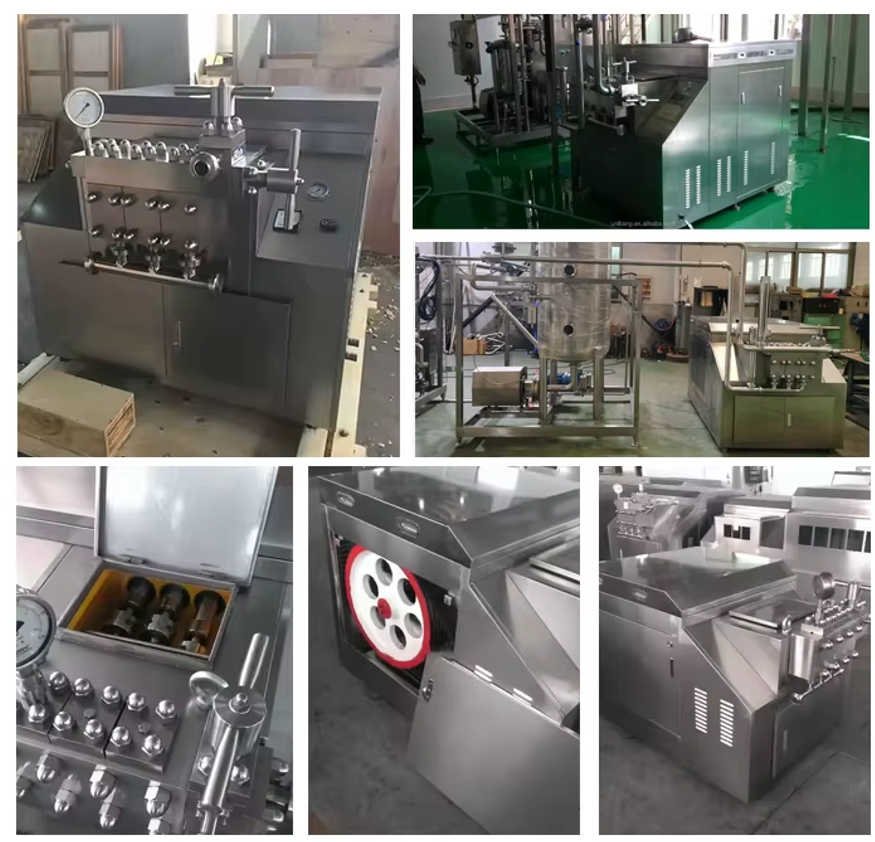
A high pressure homogenizer forces liquid through a specially designed homogenizing valve under high pressure, generating intense turbulence, shear, and cavitation to reduce droplet or particle size. It is widely used to produce fine, uniform emulsions and dispersions in food, pharmaceutical, cosmetic, and biotechnology industries.
Core Differences At a Glance
| Feature | Batch High Shear Mixer | Inline High Shear Mixer | Colloid Mill | High Pressure Homogenizer |
|---|
| Working Principle | High-speed rotor-stator mixing in a vessel | Continuous rotor-stator mixing in a pipeline | High-speed rotor and stator with a narrow adjustable gap | Liquid forced through a homogenizing valve under high pressure |
| Processing Mode | Batch processing | Continuous processing | Batch or continuous processing | Continuous processing |
| Main Function | Mixing, emulsifying, dispersing | Rapid mixing, emulsifying, dispersing | Fine grinding, emulsifying, particle size reduction | Fine homogenization and droplet size reduction |
| Shear Intensity | High | High | High, with strong localized shear | Very high, depending on operating pressure |
| Particle Size Reduction | Moderate to fine, depending on design | Moderate to fine, depending on design | Fine grinding and dispersion | Very fine particle or droplet size reduction |
| Viscosity Suitability | Low to high, depending on design | Low to medium, depending on design | Low to high, depending on design | Typically low to medium; depends on equipment and product |
| Production Scale | Small to large batches | Medium to large continuous production | Small to large production | Medium to large continuous production |
| Typical Applications | Creams, lotions, gels, suspensions | Emulsions, coatings, chemical solutions | Sauces, nut butter, ointments, creams | Milk, beverages, pharmaceutical emulsions |
| Main Advantage | Flexible batch control | Efficient continuous processing | Effective fine grinding and smooth texture | Excellent homogenization and fine droplet formation |
| Main Limitation | Batch time and vessel cleaning | Requires suitable flow and process control | Not ideal for every formulation or extremely fine homogenization requirement | Higher pressure requirements and maintenance complexity |
Which Type of High Shear Mixer Should You Choose?
Choosing the right high shear mixing equipment depends on your material properties, production capacity, target particle size, and processing method.
– Choose a Batch High Shear Mixer if you need flexible batch processing for emulsifying, dispersing, and mixing multiple ingredients in a single tank. It is widely used in cosmetics, pharmaceuticals, food, and chemical manufacturing.
– Choose a Inline High Shear Mixer if you require continuous processing, fast mixing, and consistent product quality. It is ideal for large-scale production, inline emulsification, powder incorporation, and continuous chemical processing.
– Choose a Colloid Mill if your application requires fine grinding, particle size reduction, or a smooth and uniform texture. It is particularly suitable for viscous products such as sauces, nut butter, creams, ointments, and pastes.
– Choose a High Pressure Homogenizer if you need very fine particle or droplet sizes and highly uniform emulsions. It is commonly used in dairy products, beverages, pharmaceuticals, and other applications requiring intensive homogenization.
Quick Selection Guide
| Your Requirement | Recommended Equipment |
|---|---|
| Flexible batch production | High Shear Batch Mixer |
| Continuous, high-volume processing | High Shear Inline Mixer |
| Fine grinding and smooth texture | Colloid Mill |
| Very fine emulsions and droplet reduction | High Pressure Homogenizer |
| Mixing powders into liquids | High Shear Batch or Inline Mixer |
| Processing viscous pastes | Colloid Mill or suitable Batch Mixer |
Applications of Different Types of High Shear mixers
Batch High Shear Mixer
Best for: Batch mixing, emulsification, and powder dispersion.
A high shear batch mixer processes ingredients inside a tank using a high-speed rotor-stator system. It is ideal for products that require flexible formulations and controlled batch production.
Typical applications:
- Cosmetics: creams, lotions, shampoos
- Pharmaceuticals: topical gels and suspensions
- Food: sauces, dressings, and mayonnaise
- Chemicals: coatings, adhesives, and dispersions

Inline High Shear Mixer
Best for: Continuous mixing, emulsification, and dispersion.
An inline high shear mixer processes materials as they flow through a mixing head installed in a pipeline. It is suitable for continuous production and integration into automated processing lines.
Typical applications:
- Chemical processing: liquid additives and formulations
- Food and beverage: sauces, syrups, and liquid emulsions
- Cosmetics: continuous cream and lotion production
- Industrial manufacturing: powder-liquid dispersion and recirculation mixing
Colloid Mill
Best for: Fine grinding, particle size reduction, and smooth-textured products.
A colloid mill processes materials through a narrow gap between a rotating rotor and a stationary stator. It is particularly useful for viscous products requiring fine grinding and uniform dispersion.
Typical applications:
- Food: peanut butter, tomato sauce, chili paste
- Pharmaceuticals: ointments and topical preparations
- Cosmetics: creams and pastes
- Chemicals: pigments, suspensions, and specialty pastes
High Pressure Homogenizer
Best for: Very fine emulsification and homogenization.
A high pressure homogenizer forces a liquid through a specialized valve or interaction chamber at high pressure. It generates intense turbulence and shear to reduce droplet or particle size.
Typical applications:
- Dairy: milk, cream, and yogurt bases
- Beverages: juice emulsions and nutritional drinks
- Pharmaceuticals: drug emulsions and nanosuspensions, where suitably designed
- Biotechnology: cell disruption and other specialized processes
FAQ
Q: Can a high shear mixer replace a colloid mill? A: Often, yes. A rotor-stator high shear mixer is similar to a colloid mill but typically offers higher shear rates and faster processing. For ultra-fine grinding (below 1 micron), a media mill or bead mill is still preferred.
Q: How do I prevent foaming in my high shear mixer? A: Use an inline mixer instead of a batch mixer. If you must use a batch mixer, submerge the head as deep as possible, use a variable speed drive to start slow, and consider adding a defoaming agent.
Q: What is the “tip speed” of a high shear mixer? A: Tip speed is the velocity of the rotor’s outer edge. It is the primary indicator of shear intensity. General mixing: 1,000 – 2,500 ft/min. High shear emulsification: 3,000 – 5,000 ft/min. Super high shear: 6,000+ ft/min.