What Is an Inline Mixer?
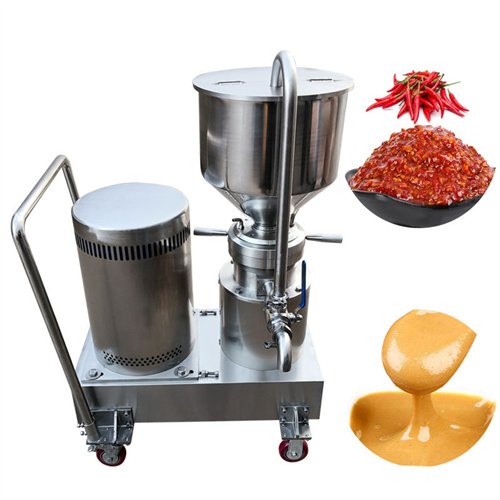
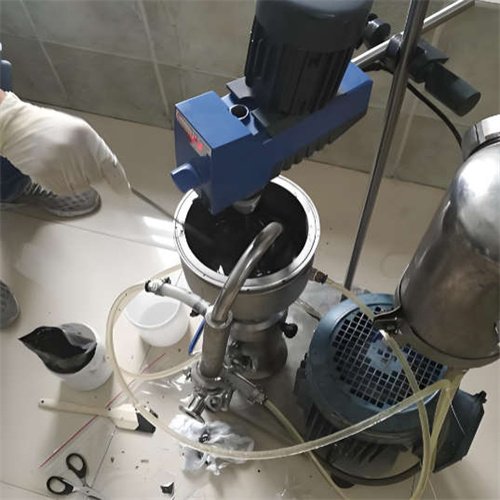
A inline mixer is a mechanical mixing device installed in a process pipeline or recirculation system. It uses high-speed mechanical action to mix, disperse, or emulsify materials while they flow through the mixing chamber.
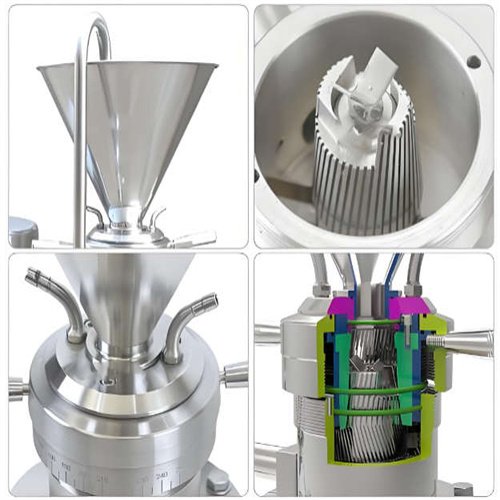
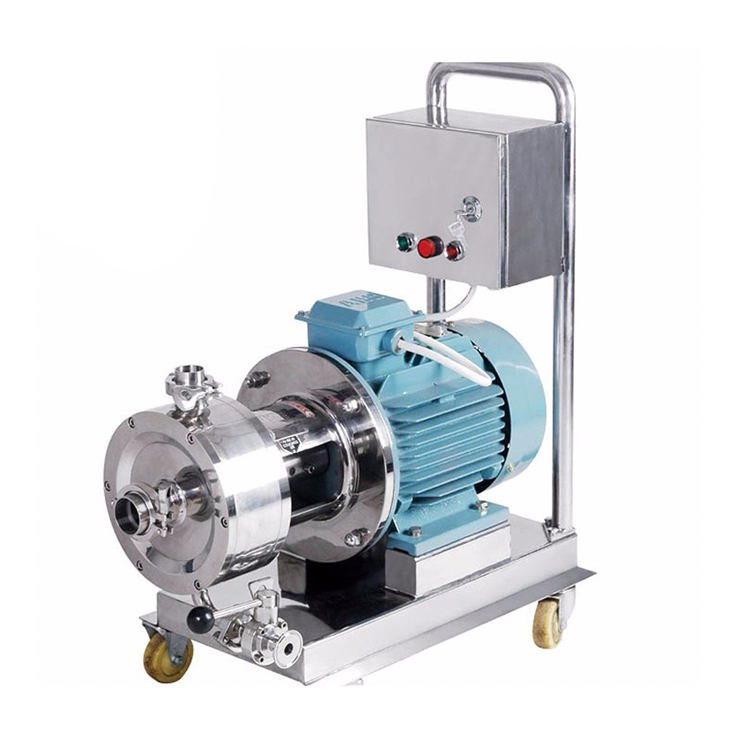
Many designs consist of a motor, drive shaft, rotor, stator, mixing housing, inlet, and outlet.
The rotor rotates at high speed within or near the stationary stator. As material passes through the working head, it experiences mechanical shear, turbulence, and repeated flow changes.
Depending on the formulation and operating conditions, this action can help:
- Disperse powders into liquids.
- Break down particle agglomerates.
- Emulsify oil and water phases.
- Improve the uniformity of suspensions.
- Reduce the size of dispersed liquid droplets.
- Blend ingredients more efficiently.
- Support continuous or recirculating production.
High shear inline mixers are used in applications where conventional low-intensity blending may not achieve the required dispersion or emulsification quality.

Working Principle of an Inline Mixer
The operation of an inline mixer relies on high-velocity rotor rotation within a stationary stator gap, creating a continuous four-stage mechanical process:
[ Pipeline Inlet ] ──► [ Stage 1: High-Speed Suction ] ──► [ Stage 2: Centrifugal Acceleration ] ──► [ Stage 3: Intense Hydraulic Shear ] ──► [ Stage 4: Radial Discharge ]
Stage 1: High-Speed Suction
As the precision rotor spins at tip speeds between 3,000 to 10,000 feet per minute (FPM), it generates a powerful localized suction at the center of the workhead. This draws liquid streams and dissolved or suspended solids continuously into the mixing chamber.
Stage 2: Centrifugal Acceleration
Centrifugal force accelerates the incoming ingredients toward the outer perimeter of the rotor head. As the fluid travels across the rotating blades, it undergoes initial mechanical shear.
Stage 3: Intense Hydraulic Shear
The material is forced at high velocity through precision-machined openings (slots, perforations, or fine mesh) in the stationary stator. The tight clearance between the rotor blade tips and the stator wall (typically 100 to 300 microns) Subjects the fluid to intense hydraulic shear, breaking down agglomerates and reducing liquid droplet sizes.
Stage 4: Radial Discharge & Downstream Pumping
The refined product is forced out through the stator perforations, exiting via the discharge port. The pumping action generated by the rotor-stator assembly helps propel the liquid downstream or back into a vessel loop.
Main Components of a High Shear Inline Mixer
Motor: Supplies the mechanical power required to drive the rotor.
Drive shaft: Transfers rotational power from the motor to the mixing head.
Rotor: Rotates at high speed and generates mechanical forces within the working chamber.
Stator: Provides stationary openings or passages through which the material flows.
Mixing housing: Encloses the working head and directs material through the equipment.
Inlet and outlet: Connect the mixer to the process pipeline or recirculation system.
Some systems also include a separate feed pump, flowmeters, pressure gauges, temperature sensors, and control equipment.
The final configuration depends on the required flow rate, material properties, process pressure, and intended application.
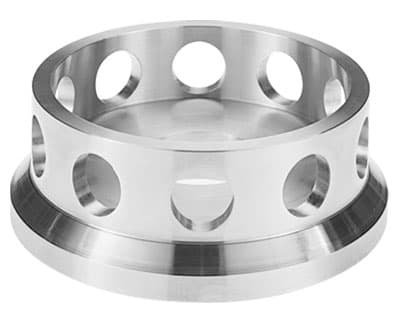
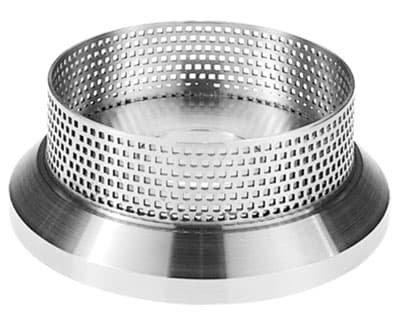
Workheads of a high shear inline mixer
General Purpose Disintegrating Head
Used for a wide range of applications, this head will give the greatest throughput. Suitable for the blending of liquids of similar or greatly varying viscosities, its uses include the disintegration of solid and semi-solid materials.
Square Hole High Shear Screen
The configuration and fine internal tolerances of this stator provide exceptionally high shear rates which are ideal for the rapid size reduction of soluble and insoluble granular solids. It is also suitable for the preparation of emulsions, gels and thickeners and fine collodial suspensions.
Slotted Disintegrating Head
For the disintegration of fibrous materials such as animal and vegetable tissue, as well as the disintegration and solubilisation of “elastic” materials such as rubbers and polymers.

Main Types of Inline Mixers
Depending on the degree of shear and fluid viscosity, inline mixers are categorized into three main configurations:
1. Single-Stage Inline High Shear Mixers
Features a single rotor-stator generator set inside the chamber.
- Best For: Standard liquid-liquid emulsification, dissolving solids, and general dispersion where extreme micro-nanometer droplet sizes are not required.
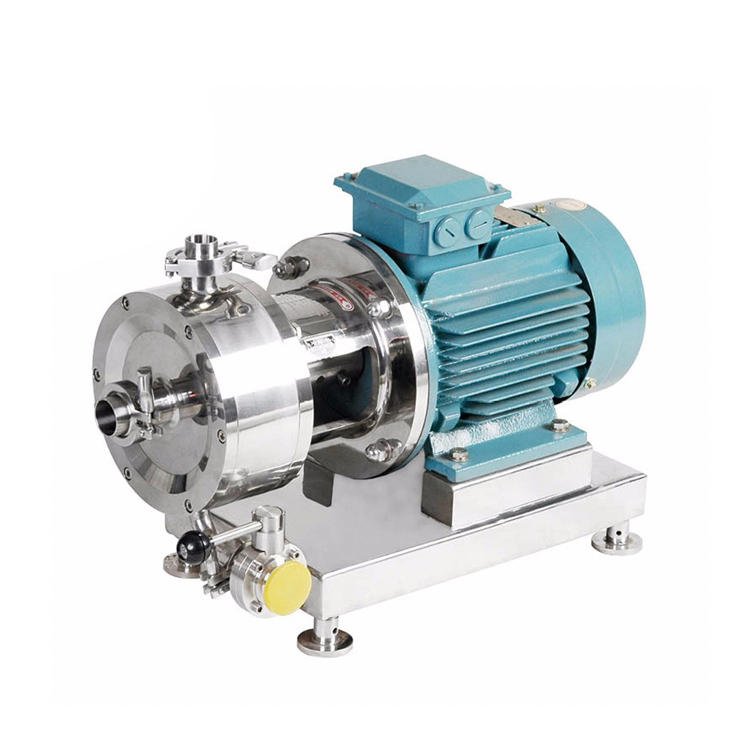
2. Multi-Stage (Concentric) Inline Mixers
Contains two, three, or four concentric sets of rotor-stators arranged in series on a single shaft. Fluid must pass through multiple shear gaps in a single pass.
- Best For: Sub-micron emulsions, tight particle size distributions, and high-throughput lines requiring instant single-pass homogenization.


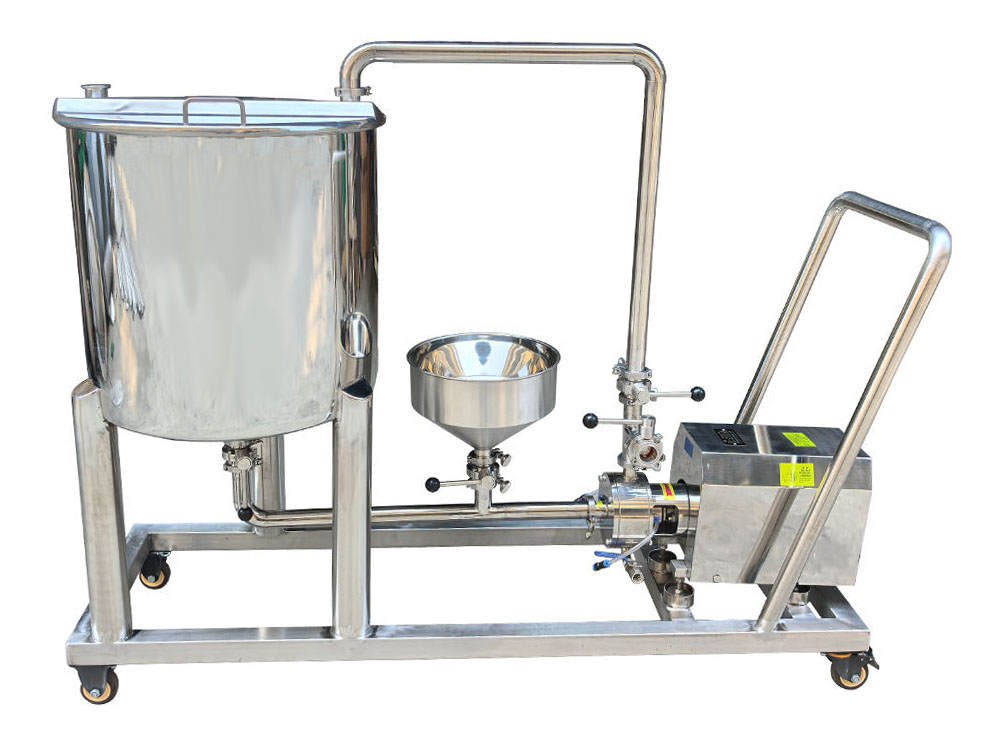
3. Powder Induction Inline Systems
Integrates a high-shear inline mixer with a vacuum-assisted hopper and injector valve. As liquid flows through the unit, it creates a vacuum that pulls dry powders directly into the high-shear zone.
- Best For: Instantly wetting difficult powders (xanthan gum, carbomers, milk solids, starch) without forming floating lumps or “fish-eyes.”
Key Advantages of Inline Mixers
Continuous high shear mixing offers several potential advantages.
Steady production: The system can process materials continuously without waiting for a complete batch to finish.
Process integration: The mixer can be connected to dosing systems, storage tanks, filling equipment, and other production machinery.
Controlled operating conditions: Flow rates and mixing parameters can be monitored and adjusted.
Reduced handling: Mixing can occur during material transfer, potentially reducing separate processing steps.
Suitable for large production volumes: Continuous operation can support manufacturing processes with stable and predictable material demand.
However, continuous processing requires reliable feeding, suitable equipment sizing, and appropriate control of operating conditions.
Applications Of High Shear Inline Mixers
Inline mixers serve critical roles across hygienic and heavy industrial processing sectors:
| Industry | Typical Formulations | Primary Process Goal |
| Food & Beverage | Mayonnaise, salad dressings, fruit concentrates, plant milks | Oil-in-water emulsification, lump-free gum hydration, smooth mouthfeel |
| Cosmetics & Personal Care | Lotions, skin creams, shampoos, sunscreens, hair dyes | Silky textures, bubble-free de-aeration, tight micro-emulsion distribution |
| Pharmaceuticals | API suspensions, sterile syrups, ointments, lipid emulsions | cGMP compliance, sterile inline processing, uniform active ingredient distribution |
| Chemicals & Materials | Latex paints, pigment dispersions, adhesives, lubricants | Deagglomeration of solid colorants, rapid chemical reaction acceleration |
| Paper & Agriculture | Paper coatings, starch slurries, pesticide emulsions | Continuous high-volume powder dispersion and slurry stability |
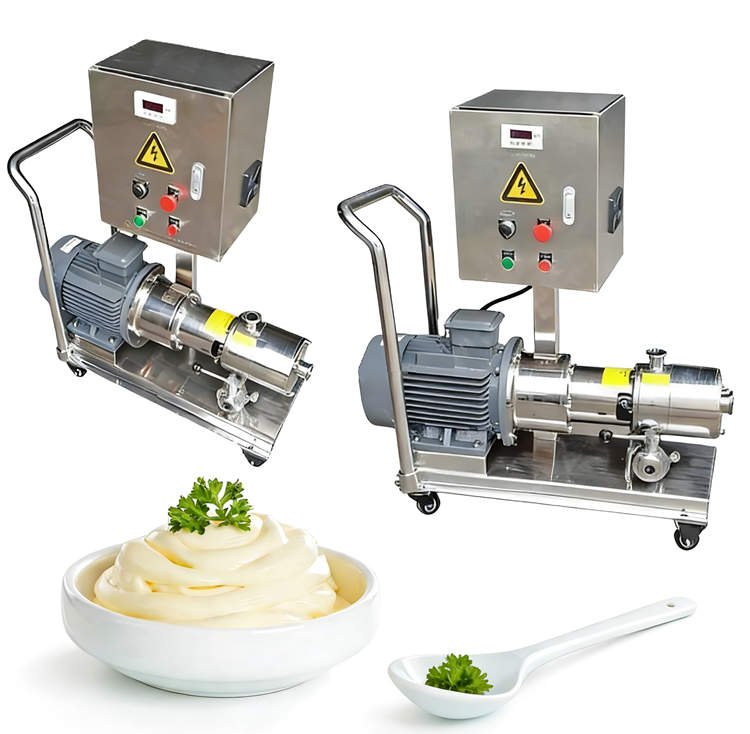
Specifications Of Three Stage Inline Mixers

| Model | Power (kW) | Rotation speed (rpm) | A | B | C | D | E | L | J (DN) | K (DN) | Flow Head(m) | Capacity (m³/h) |
|---|---|---|---|---|---|---|---|---|---|---|---|---|
| NRL3-60 | 4 | 2900 | 950 | 200 | 180 | 100 | 50 | 308 | 38 | 32 | 10 | 0-1.5 |
| NRL3-100 | 5.5 | 2900 | 1070 | 230 | 232 | 155 | 50 | 308 | 40 | 40 | 10 | 0-3 |
| NRL3-120 | 7.5 | 2900 | 1315 | 245 | 260 | 170 | 60 | 308 | 50 | 50 | 10 | 0-4 |
| NRL3-140 | 11 | 2900 | 1370 | 260 | 260 | 185 | 60 | 347 | 50 | 50 | 10 | 0-5 |
| NRL3-165 | 18.5 | 2900 | 1430 | 300 | 280 | 220 | 80 | 363 | 50 | 50 | 10 | 0-8 |
| NRL3-180 | 22 | 2900 | 1870 | 300 | 300 | 242 | 80 | 363 | 80 | 80 | 10 | 0-12 |
| NRL3-185 | 30 | 2900 | 1980 | 300 | 350 | 280 | 90 | 396 | 100 | 100 | 10 | 0-18 |
| NRL3-200 | 45 | 2900 | 2100 | 305 | 380 | 300 | 90 | 396 | 100 | 100 | 10 | 0-25 |
| NRL3-210 | 55 | 1470 | 2160 | 305 | 380 | 310 | 100 | 413 | 100 | 100 | 10 | 0-35 |
| NRL3-230 | 75 | 1470 | 2370 | 325 | 415 | 320 | 120 | 413 | 125 | 125 | 10 | 0-50 |
| NRL3-245 | 90 | 1470 | 2480 | 325 | 415 | 330 | 120 | 435 | 125 | 125 | 10 | 0-75 |
| NRL3-260 | 110 | 1470 | 2595 | 325 | 415 | 340 | 130 | 435 | 125 | 125 | 10 | 0-90 |
| NRL3-275 | 132 | 1470 | 2615 | 340 | 415 | 350 | 130 | 466 | 125 | 125 | 10 | 0-110 |
How to Select the Right Inline Mixer
Selecting a high shear inline mixer requires evaluating the process as a complete system.
Determine the Required Flow Rate
For continuous processing, identify the normal flow rate and expected operating range.
For loop processing, determine the tank volume and required circulation rate.
The mixer and pump must be compatible with the actual operating conditions.
Check Fluid Viscosity
Viscosity affects flow behavior, pressure drop, pump selection, and mixing performance.
High-viscosity materials may require specialized mixing geometries or additional pumping capacity.
Provide the manufacturer with the viscosity range and operating temperature.
Define the Required Dispersion Quality
Determine whether the process requires liquid blending, powder dispersion, emulsification, or a specific particle or droplet size.
The equipment should be selected according to the required product characteristics rather than motor power alone.
Testing with the actual formulation may be necessary for demanding applications.
Evaluate Motor Power and Rotor Speed
Motor power and rotor speed influence the energy delivered to the mixing zone.
However, higher speed or greater power does not automatically guarantee better results.
The appropriate operating conditions depend on the formulation, working-head geometry, flow rate, and required processing quality.
Consider Pump Capacity and Pressure Drop
The feed pump must supply sufficient flow and pressure to overcome resistance from the mixer, piping, valves, and other system components.
For recirculation systems, pump selection must also account for tank level, suction conditions, and the properties of the circulating fluid.
Select Compatible Wetted Materials
Wetted components and seals must be compatible with the process fluid.
Consider chemical concentration, operating temperature, pressure, cleaning agents, and product-contact requirements.
Stainless steel is commonly used in industrial mixing equipment, but the appropriate grade depends on the actual process conditions.
Evaluate Cleaning and Maintenance
Review access to the mixing head, cleaning requirements, seal replacement, and routine maintenance.
For food, pharmaceutical, and cosmetic applications, cleaning accessibility and product retention are important considerations.
The final design should support the facility’s required cleaning procedures and maintenance schedule.
Frequently Asked Questions About Inline Mixers
Q1 What is the difference between a high shear inline mixer and a batch high shear mixer?
A high shear inline mixer processes material within a pipeline or circulation system. A batch high shear mixer processes material in a vessel.
Inline equipment can support continuous or recirculating operation, while batch equipment is commonly used for tank-based formulation.
Q2 What is the difference between continuous and loop processing?
Continuous processing feeds material through the mixer and sends the product downstream. Loop processing returns material to a tank for repeated passes through the mixing zone.
Q3 Can a high shear inline mixer produce an emulsion?
Yes. It can help disperse one liquid phase into another by breaking droplets into smaller sizes. The final droplet size and emulsion stability depend on the formulation and processing conditions.
Q4 Does a high shear inline mixer require a separate pump?
Many systems require a separate pump to move the material through the mixer. The exact arrangement depends on the equipment design, flow rate, system pressure, and installation.
Q5 Is a high shear inline mixer suitable for high-viscosity materials?
Some models can handle high-viscosity fluids, but suitability depends on the fluid properties, pump capacity, mixing head design, and required processing conditions.
Q6 How many passes are required in loop processing?
There is no universal number of passes. The required circulation time depends on the formulation, flow rate, mixer design, and desired product quality. Process testing can help establish an appropriate endpoint.