What Is a Batch Mixer?
A batch mixer is a mixing machine that processes a predetermined quantity of material during each production cycle.
In a typical batch mixing process:
- Raw materials are loaded into the mixing vessel.
- The batch mixer starts rotating.
- Materials are blended, dispersed, emulsified, dissolved, or otherwise processed.
- The mixture reaches the required level of uniformity or process condition.
- The finished batch is discharged.
- The vessel is prepared for the next batch.
The process can be controlled manually or automatically depending on the complexity of the production system.
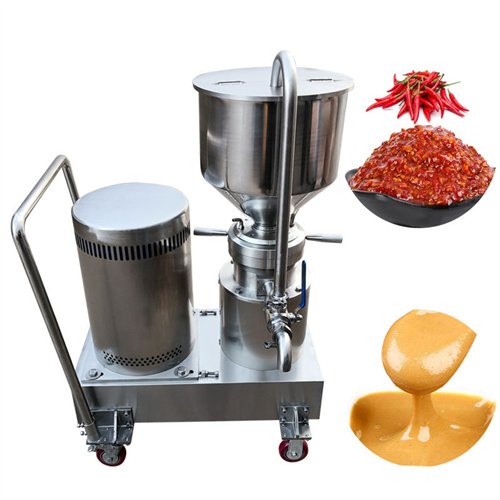
A basic batch mixer may consist of a mixing tank, batch mixer, motor, gearbox, shaft, rotor and stator, discharge valve, and control system. More advanced systems may include temperature control, vacuum, pressure, high-shear mixing, homogenization, load cells, and automated dosing.
Working Principle of a Batch Mixer
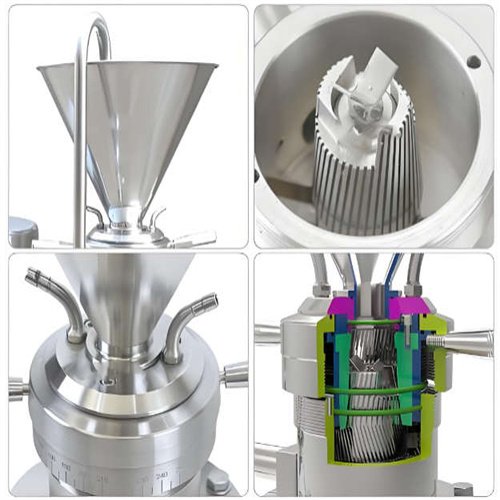
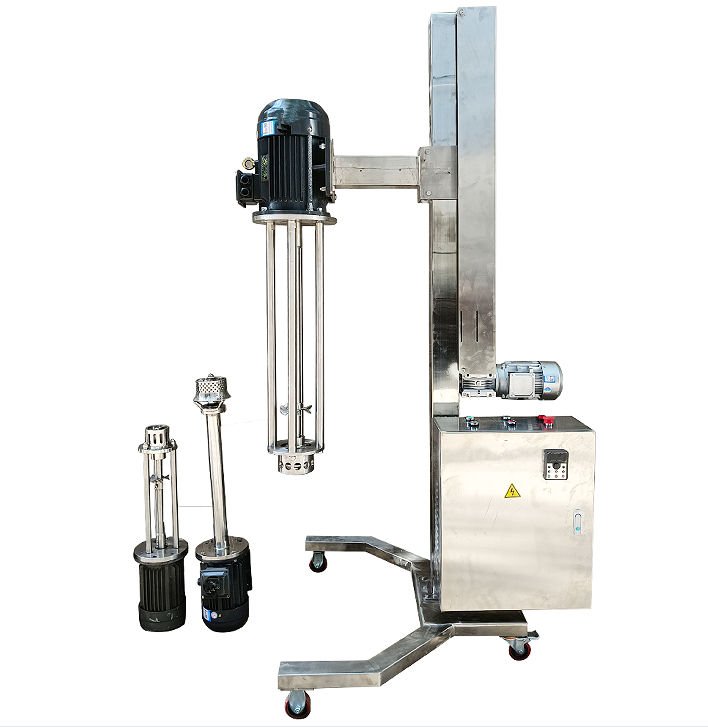
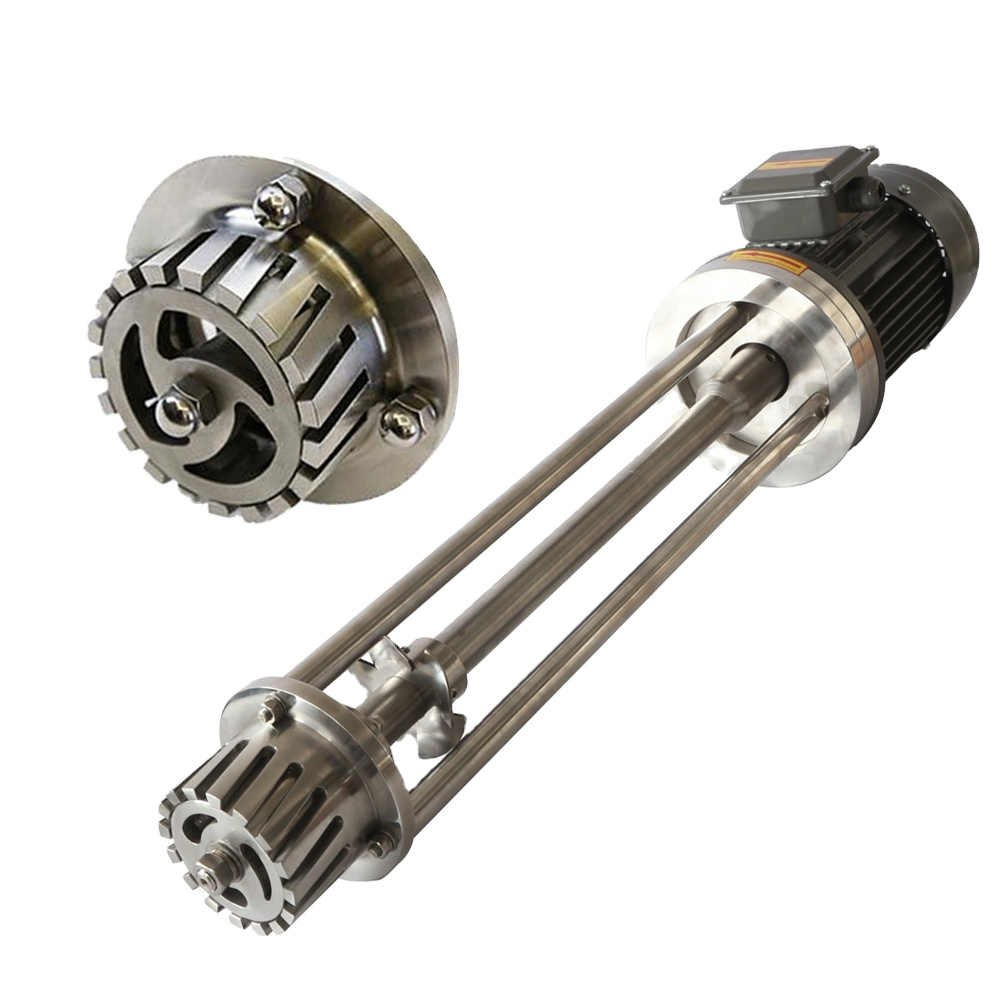
The NEWAFLUIDS High Shear Batch Mixer is designed for efficient mixing, dispersing, emulsifying, homogenizing, and particle size reduction in batch processing applications. The batch mixer mainly consists of a motor, mixing shaft, rotor, stator, and working head. The high-speed rotor and precisely designed stator work together to generate intense mechanical forces within the processing chamber.
High-Speed Rotor and Stator System
When the motor drives the rotor at high speed, a strong centrifugal force is generated inside the working head. At the same time, the material is continuously drawn into the shear zone through the axial direction.
The rotating rotor accelerates the material outward in a radial direction, forcing it through the narrow gap between the rotor and stator. This precisely controlled shear gap creates a high-intensity processing zone where the material is subjected to rapid velocity changes and strong shear forces.
Depending on the application and mixer configuration, the rotor tip speed can typically reach approximately 15–40 m/s, providing sufficient energy for demanding mixing and dispersion processes.
Multiple Mechanical and Hydraulic Forces
Inside the working chamber, the material is exposed to multiple processing forces rather than simple agitation. These include:
- Mechanical shear
- Impact
- Extrusion
- Friction
- Tearing
- Turbulence
These combined forces break down agglomerates, improve particle distribution, and accelerate the interaction between different liquid or solid-liquid phases.
The material is continuously circulated through the rotor-stator assembly, allowing repeated exposure to the high-shear zone. This circulation significantly improves mixing uniformity and processing efficiency.
Optimized Material Circulation
In conventional mixing systems, some material may remain near the upper or lower areas of the vessel, creating dead zones or insufficient circulation. The NEWAFLUIDS High Shear Batch Mixer uses an optimized working-head structure to improve axial suction and radial discharge.
The rotor generates a strong pumping effect that draws material toward the working head. After passing through the rotor-stator gap, the processed material is discharged radially at high velocity.
When the high-velocity flow reaches the vessel wall, it changes direction and creates a strong circulation pattern within the tank. This helps establish continuous upper and lower material circulation, reducing dead zones and improving overall batch uniformity.
Repeated Circulation for Efficient Homogenization
During operation, material repeatedly passes through the high-shear head and circulates throughout the vessel. The continuous circulation allows fresh material to enter the shear zone while previously processed material is redistributed throughout the batch.
This repeated processing mechanism provides several advantages:
- Faster batch mixing
- Improved dispersion
- More uniform particle distribution
- Efficient emulsification
- Better homogenization
- Reduced agglomeration
- Shorter processing time
For liquid-liquid systems, the intense turbulence and shear forces help produce a more uniform emulsion. For solid-liquid applications, the high-energy shear zone helps wet, disperse, and break down particles and agglomerates.
Particle Size Reduction and Fine Dispersion
One of the key advantages of a high shear batch mixer is its ability to rapidly reduce particle agglomerates and improve dispersion quality.
As particles pass repeatedly through the rotor-stator gap, they experience intense shear, impact, and hydraulic forces. These forces can break down larger agglomerates into much finer particles, depending on the material characteristics, formulation, rotor-stator design, processing time, and operating conditions.
For applications requiring very fine particle dispersion or sub-micron processing, the high shear mixer can also be integrated with other grinding, milling, or homogenization technologies to achieve the required final particle size.
Efficient Mixing, Dispersion and Emulsification
The NEWAFLUIDS High Shear Batch Mixer combines high-speed rotor-stator shear with continuous batch circulation. This makes it suitable for a wide range of industrial processes where conventional agitators may not provide sufficient shear intensity.
Typical applications include:
- Emulsification
- Homogenization
- Solid-liquid dispersion
- Powder wetting
- Deagglomeration
- Particle size reduction
- Suspension preparation
- Liquid-liquid mixing
- High-viscosity product processing
The batch mixer can be configured according to the material properties, viscosity, required particle size, batch volume, and processing requirements.

Main Components of a Batch Mixer System
A complete industrial batch mixer system consists of several engineered sub-systems working in unison:
                  ┌──────────────────────────────┐
                  │   Drive Motor & Gearbox      │
                  └──────────────┬───────────────┘
                                 │
                  ┌──────────────┴───────────────┐
                  │    Shaft & Seal Assembly     │
                  └──────────────┬───────────────┘
                                 │
    ┌────────────────────────────┴────────────────────────────┐
    │                     Mixing Vessel                       │
    │  ┌───────────────────────────────────────────────────┐  │
    │  │  Tank Baffles   [ Impeller / Rotor-Stator ]       │  │
    │  └───────────────────────────────────────────────────┘  │
    │  ┌───────────────────────────────────────────────────┐  │
    │  │  Heating/Cooling Jacket   Bottom Discharge Valve   │  │
    │  └───────────────────────────────────────────────────┘  │
    └─────────────────────────────────────────────────────────┘
- Drive Motor & Gearbox: Provides the torque and speed (RPM) required to rotate shafts through viscous media.
- Batch mixer Shaft & Seals: Transfers rotational power. Mechanical seals (single or double with flush) maintain pressure, vacuum, and sanitary integrity.
- Impeller / Workhead Assembly: The primary tool that interacts with the fluid (e.g., hydrofoils, pitch blades, anchor blades, or rotor-stator heads).
- Mixing Vessel (Tank): Constructed from 304, 316L stainless steel or specialized alloys, featuring polished internal finishes for sanitary applications.
- Tank Baffles: Vertical wall plates that break up rotational swirling, converting vortex energy into top-to-bottom circulation loops.
- Heating/Cooling Jacket: Dimple or half-pipe jackets that regulate process temperatures.
- Automated Control Panel: PLC and HMI interface allowing operators to set speed profiles, cycle times, heating curves, and recipe steps.
Workheads of a high shear batch mixer
General Purpose Disintegrating Head
This is the most versatile of all the heads, giving an exceptionally vigorous mixing action. Ideal for general mixing applications, its uses also include the disintegration of solids and the preparation of gels and thickeners, suspensions, solutions and slurries.
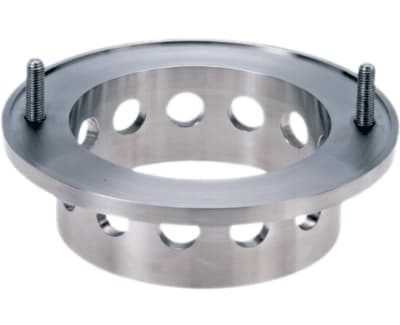
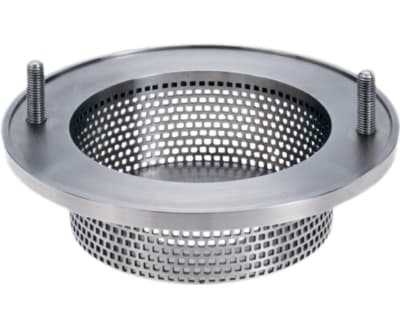
Square Hole High Shear Screen
Provides exceptionally high shear rates ideal for the rapid size reduction of soluble and insoluble granular solids. It is also suitable for the preparation of emulsions and fine colloidal suspensions.
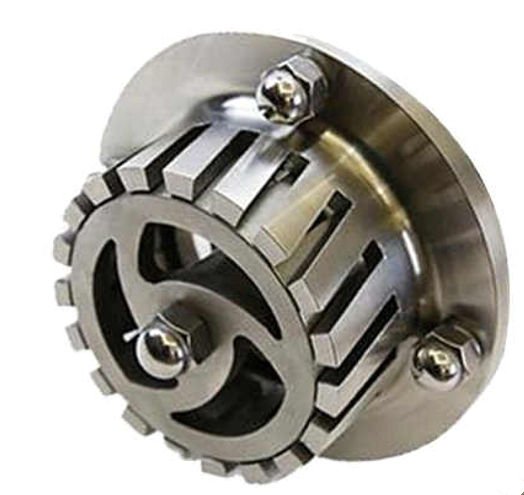
Slotted Disintegrating Head
For the disintegration of fibrous materials such as animal and vegetable tissue, as well as the disintegration and solubilisation of “elastic” materials such as rubbers and polymers.
What Are the Advantages of Batch Mixers?
Batch mixing systems offer several important advantages.
Flexible Production
Different formulations can be produced in the same mixing vessel.
This is particularly useful for manufacturers producing multiple products.
Accurate Formulation Control
Each batch can be produced according to a specific recipe.
Raw materials can be weighed and added according to predefined quantities.
Easy Product Changeover
Although cleaning is required between batches, a batch system can accommodate different products relatively easily.
Good Process Control
Operators can monitor and adjust parameters such as:
- Mixing speed
- Temperature
- Mixing time
- Vacuum
- Ingredient addition
Suitable for Different Viscosities
By selecting an appropriate agitator, batch mixers can process a wide range of materials.
Easy Batch Traceability
Each production cycle can be assigned a batch number.
This can simplify quality control and product traceability.
Batch mixing systems offer several important advantages.
Flexible Production
Different formulations can be produced in the same mixing vessel.
This is particularly useful for manufacturers producing multiple products.
Accurate Formulation Control
Each batch can be produced according to a specific recipe.
Raw materials can be weighed and added according to predefined quantities.
Easy Product Changeover
Although cleaning is required between batches, a batch system can accommodate different products relatively easily.
Good Process Control
Operators can monitor and adjust parameters such as:
- Mixing speed
- Temperature
- Mixing time
- Vacuum
- Ingredient addition
Suitable for Different Viscosities
By selecting an appropriate agitator, batch mixers can process a wide range of materials.
Easy Batch Traceability
Each production cycle can be assigned a batch number.
Industrial Applications of Batch Mixers
Batch mixers are crucial equipment across virtually every major process industry:
| Industry | Typical Formulations | Primary Mixing Objective |
| Pharmaceuticals | Syrups, ointments, tablet granulations, suspensions | cGMP compliance, sterile formulation, exact API distribution |
| Cosmetics & Personal Care | Lotions, sunscreens, shampoos, mascaras, toothpastes | Smooth texture, bubble-free de-aeration, stable micro-emulsions |
| Food & Beverage | Mayonnaise, salad dressings, fruit jams, sauces, dairy drinks | Lump-free powder wetting, oil emulsification, uniform mouthfeel |
| Chemicals & Materials | Specialty lubricants, resins, adhesives, latex paints | Pigment deagglomeration, high-viscosity blending, thermal jacket control |
| Construction & Agriculture | Pesticide slurries, tile mortars, ceramic slip | Heavy solid suspension, dry powder coating |
NEWAFLUIDS High shear batch mixer
The following sheet show our standard size of high shear batch homogenizer, It could also be customized according to your tank size. According to diferent working condition, like viscosity, power etc

| Model | Power(KW) | Speed (RPM) | Process Capacity(L) | D | D1 | P | L |
|---|---|---|---|---|---|---|---|
| HSBM90 | 1.5 | 2900 | 5-50 | 80 | 140 | 200 | 355 |
| HSBM100 | 2.2 | 2900 | 50-100 | 88 | 145 | 200 | 650 |
| HSBM120 | 4 | 2900 | 100-300 | 120 | 180 | 250 | 750 |
| HSBM140 | 7.5 | 2900 | 200-800 | 140 | 210 | 300 | 900 |
| HSBM160 | 11 | 2900 | 300-1000 | 160 | 230 | 350 | 1050 |
| HSBM180 | 18.5 | 2900 | 500-1500 | 180 | 260 | 350 | 1200 |
| HSBM200 | 22 | 2900 | 800-2000 | 200 | 270 | 350 | 1200 |
| HSBM220 | 30 | 1450 | 1000-3000 | 240 | 320 | 400 | 1355 |
| HSBM240 | 37 | 1450 | 1500-5000 | 260 | 340 | 400 | 1395 |
Frequently Asked Questions About Batch Mixers
Q1 What is the difference between a batch mixer and a continuous mixer?
A batch mixer processes a fixed quantity of material during each cycle, while a continuous mixer processes material continuously as it enters and exits the equipment.
Q2 Can a batch mixer handle high-viscosity products?
Yes. High-viscosity materials can be processed using suitable agitators such as anchor, helical ribbon, or planetary mixing systems. The motor, gearbox, shaft, and impeller must be properly sized for the required torque.
Q3 Can a batch mixer heat or cool products?
Yes. Many industrial batch mixers use jacketed vessels, internal coils, or external heat-transfer systems to heat or cool the product during mixing.
Q4 What material is commonly used for batch mixer tanks?
Stainless steel 304 and stainless steel 316L are common choices. The appropriate material depends on product chemistry, temperature, sanitary requirements, and corrosion conditions.
Q5 How long does batch mixing take?
Mixing time varies significantly depending on the material, batch size, viscosity, agitator design, speed, and required mixing result. Mixing time should ideally be established through process testing rather than estimated from tank volume alone.