What is a high speed homogenizing colloid mill
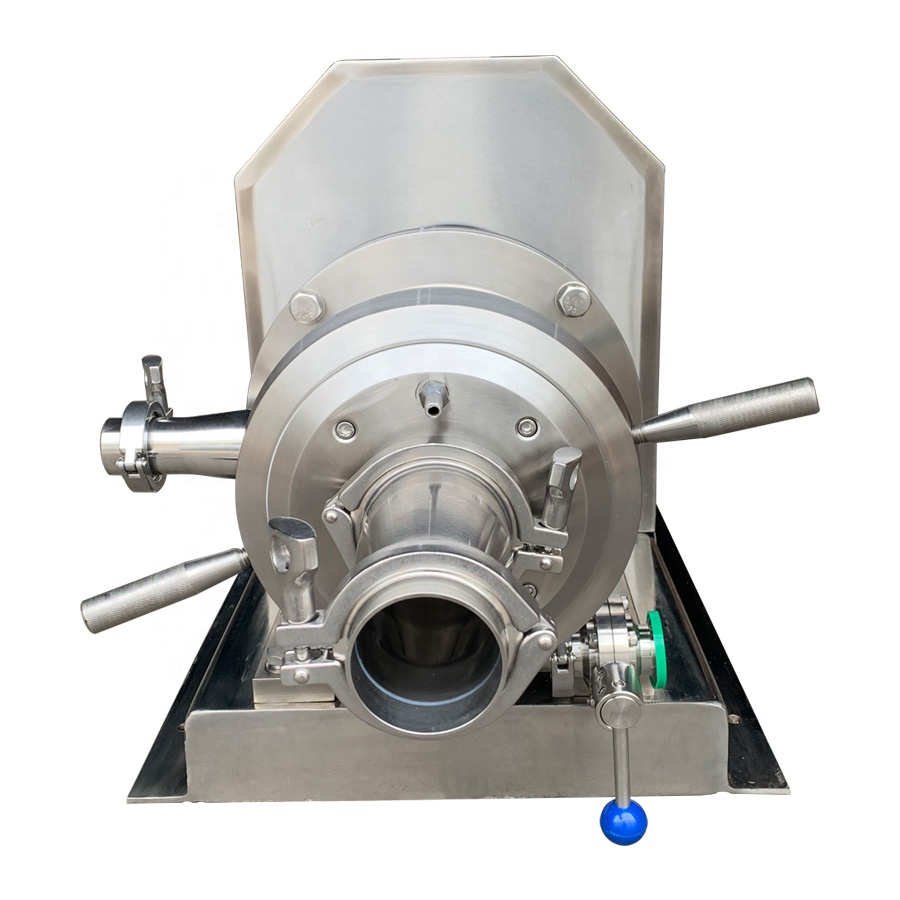
A High speed homogenizing colloid mill is a continuous wet ultra fine grinding device based on high shear force and precise gap control. Its core lies in the micron-level adjustable gap (typically 0.05–0.7 mm) between the rotor and stator, combined with a linear velocity of thousands of revolutions per minute. This allows materials to achieve cell wall disruption under instantaneous high pressure, strong turbulence, and high-frequency impact, enabling high-speed dispersion, homogenization, grinding, refining, and conveying of food-grade materials.
Working Principle of Micron-Level Gap Control
The colloid mill gap between the stator and rotor can be precisely adjusted (typically 0.05–0.7 mm). When materials pass through this gap under high pressure, they are subjected to three physical actions:
Shear Force: High-speed relative motion (speeds up to 14000–18000 RPM)
High-Frequency Vibration: The serrated grinding disc structure induces high-frequency vibration.
Friction: The material is subjected to intense friction within a narrow gap.
Ultra-Fine Process:
The material undergoes multi-stage grinding under instantaneous high pressure and strong turbulence:
The first-stage suction shearing zone breaks down large particles;
The second-stage grinding zone further refines the material;
The third-stage fine grinding zone reduces the particle size to 0.5–2 micrometers (some equipment can reach the nanometer level)
Four-Stage High-Efficiency Grinding, Cell Wall Breaking, and Homogenization.
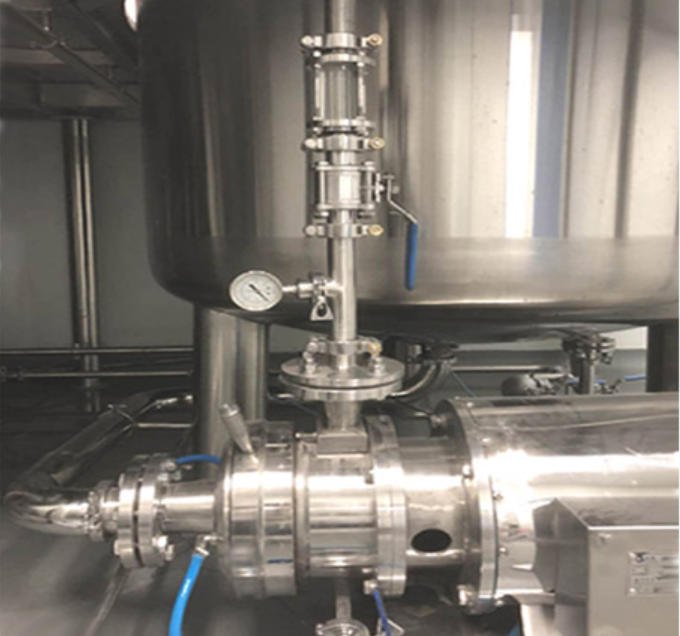
Food-Grade Characteristics
Material Safety: Made of SUS316L stainless steel or special alloys, meeting FDA/GMP hygiene standards;
Temperature Control Design: Some colloid mill models are equipped with cooling jackets to control material temperature rise (e.g., German equipment results in only a slight temperature rise after processing), preserving heat-sensitive nutrients;
No Dead Corner Structure: Vertical split design supports CIP/SIP online cleaning, preventing microbial growth;
Application Examples
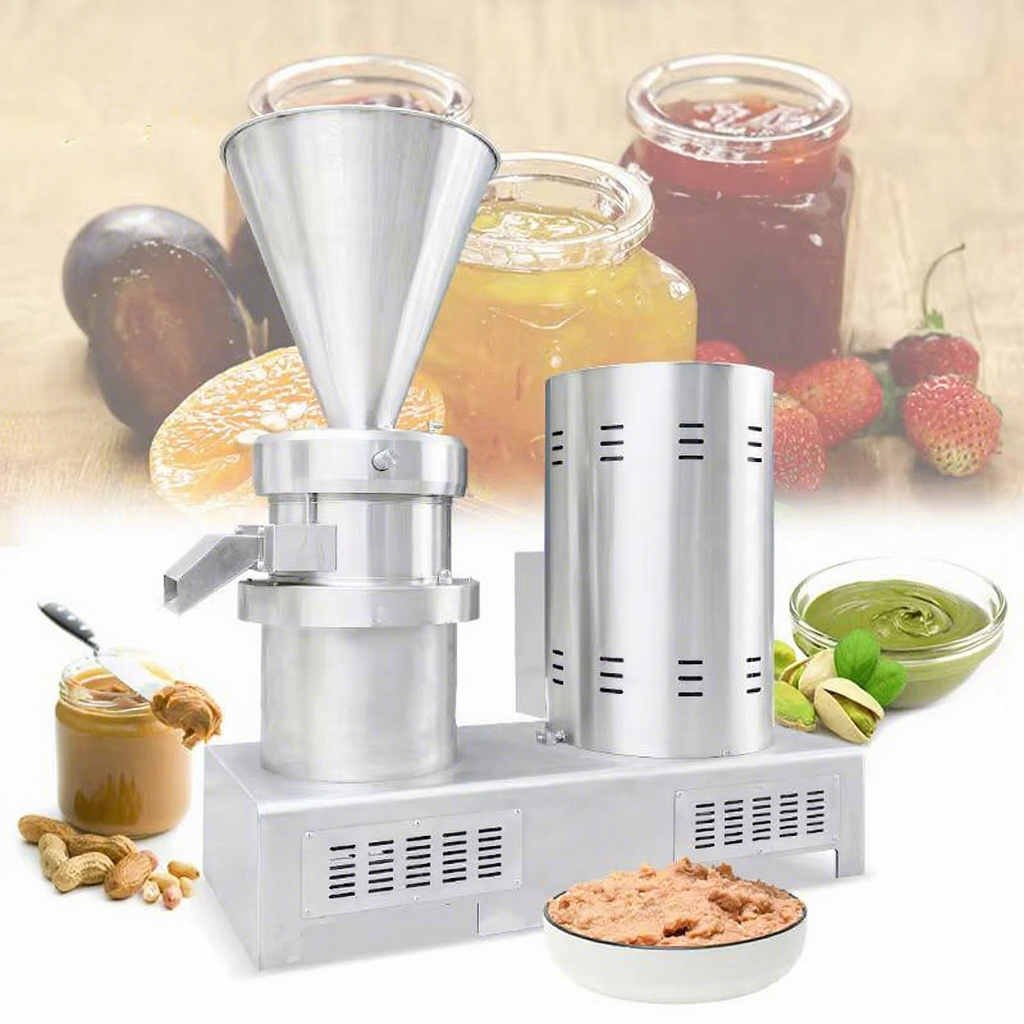
Peanut Butter Production: Granules are refined to the micron level, solving the problem of oil separation;
Meat Bone Broth Emulsification: 30-second processing transforms lamb bones into a milky white paste, leaving no residue;
Sesame Paste/Baby Food: Preserves the flavor of the raw materials, with a delicate texture and no grainy feel.
Technological Advantages: Highly Efficient Continuous Production: Industrial-grade flow rates up to 80 tons/hour
High Adaptability: Capable of handling paste-like materials with viscosities up to 20,000 centipoise (e.g., mooncake fillings, cosmetic base pastes);
Precise Control: Variable frequency speed control achieves different fineness requirements (e.g., 20μm for juice homogenization, ≤5μm for ointments).
This technology achieves ultra fine pulverization through physical processes, avoiding chemical additives, making it irreplaceable in the high-end condiment, dairy, and functional food industries.